
Obama's infomercial moved me to tears. I have never felt moved by a presidential nominee in my lifetime, let alone by any contemporary American political figure.
Wednesday, October 29, 2008


Tuesday, October 28, 2008
Palin spent more than $51,000 in taxpayer funds to remodel the governor’s Anchorage office suite
Boston Herald
By Laura Crimaldi
Sunday, October 26, 2008
GOP vice presidential hopeful Sarah Palin spent more than $51,000 in taxpayer funds to remodel the governor’s Anchorage office suite and spruce up her mansion and office in Juneau, a Herald review of expense records shows.
Palin spent most of the funds, $45,137, in April to build and furnish three offices inside her suite at the Robert B. Atwood Building in Anchorage, records show.
In June 2007, Palin spent $5,380 for labor and materials on a 72-inch wooden display case in her Juneau office. The case houses a football and basketball signed by players from championship high school teams, native artwork, a Klondike Trail mug and other items, said gubernatorial spokesman William D. McAllister.
Another $1,205 was spent in February 2007 on blinds for an arched window and stairwell at the governor’s mansion in Juneau.
The McCain-Palin campaign said it would characterize the remodeling expenses as “routine.”
“Gov. Palin has a long record of cutting wasteful spending, using her veto pen to eliminate nearly a half-billion dollars from the budget,” said Jeff Grappone, New England communications director. “She sold the state’s luxury jet, scrapped the governor’s personal chef and got rid of the personal driver.”
On the campaign trail, Palin has touted that record.
“I came to office promising to control spending by request if possible and by veto if necessary,” she said in her convention address.
The money spent for remodeling has not been previously publicized. Alaska government watchdogs said it did not change their opinion of the governor, who is well-regarded in a state infamous for its profligate pols.
“The lady’s literally done a good job up here,” said Donna Gilbert, president of the Interior Taxpayers’ Association in Fairbanks, who noted a mayor in Fairbanks once spent $50,000 on a bathroom.
However, state Sen. President Lyda Green - a Republican who has clashed with Palin over policy - said the cost to remodel the Anchorage offices was “extravagant.”
“As far as I am concerned, that’s excessive to spend that much on four cubby holes,” Green said.
The work on the Anchorage site created new offices for Kelly Goode, Palin’s legislative director, and Roseanne Hughes, director of external communications, McAllister said. The third office is reserved for “traveling staff,” who divide their time between Anchorage and Juneau, which are located 571 miles apart, McAllister said.
A Palin staffer said the Juneau mansion’s new blinds were installed to provide privacy.
“The residence manager determined that the blinds were necessary to prevent observation from the street of the family members,” administrative director Linda J. Perez said in an e-mail.
Mike McBride, past president of the Alaska Voters Organization, did not take issue with the expenses. “It’s not a tremendous amount of money. Things in Alaska cost substantially more than they do in other parts of the country,” McBride said. “It’s not an unreasonable number.”
By Laura Crimaldi
Sunday, October 26, 2008
GOP vice presidential hopeful Sarah Palin spent more than $51,000 in taxpayer funds to remodel the governor’s Anchorage office suite and spruce up her mansion and office in Juneau, a Herald review of expense records shows.
Palin spent most of the funds, $45,137, in April to build and furnish three offices inside her suite at the Robert B. Atwood Building in Anchorage, records show.
In June 2007, Palin spent $5,380 for labor and materials on a 72-inch wooden display case in her Juneau office. The case houses a football and basketball signed by players from championship high school teams, native artwork, a Klondike Trail mug and other items, said gubernatorial spokesman William D. McAllister.
Another $1,205 was spent in February 2007 on blinds for an arched window and stairwell at the governor’s mansion in Juneau.
The McCain-Palin campaign said it would characterize the remodeling expenses as “routine.”
“Gov. Palin has a long record of cutting wasteful spending, using her veto pen to eliminate nearly a half-billion dollars from the budget,” said Jeff Grappone, New England communications director. “She sold the state’s luxury jet, scrapped the governor’s personal chef and got rid of the personal driver.”
On the campaign trail, Palin has touted that record.
“I came to office promising to control spending by request if possible and by veto if necessary,” she said in her convention address.
The money spent for remodeling has not been previously publicized. Alaska government watchdogs said it did not change their opinion of the governor, who is well-regarded in a state infamous for its profligate pols.
“The lady’s literally done a good job up here,” said Donna Gilbert, president of the Interior Taxpayers’ Association in Fairbanks, who noted a mayor in Fairbanks once spent $50,000 on a bathroom.
However, state Sen. President Lyda Green - a Republican who has clashed with Palin over policy - said the cost to remodel the Anchorage offices was “extravagant.”
“As far as I am concerned, that’s excessive to spend that much on four cubby holes,” Green said.
The work on the Anchorage site created new offices for Kelly Goode, Palin’s legislative director, and Roseanne Hughes, director of external communications, McAllister said. The third office is reserved for “traveling staff,” who divide their time between Anchorage and Juneau, which are located 571 miles apart, McAllister said.
A Palin staffer said the Juneau mansion’s new blinds were installed to provide privacy.
“The residence manager determined that the blinds were necessary to prevent observation from the street of the family members,” administrative director Linda J. Perez said in an e-mail.
Mike McBride, past president of the Alaska Voters Organization, did not take issue with the expenses. “It’s not a tremendous amount of money. Things in Alaska cost substantially more than they do in other parts of the country,” McBride said. “It’s not an unreasonable number.”
Is Sarah Palin a Socialist Herself?
LIKE, SOCIALISM
The New Yorker
by Hendrik Hertzberg
NOVEMBER 3, 2008
Sometimes, when a political campaign has run out of ideas and senses that the prize is slipping through its fingers, it rolls up a sleeve and plunges an arm, shoulder deep, right down to the bottom of the barrel. The problem for John McCain, Sarah Palin, and the Republican Party is that the bottom was scraped clean long before it dropped out. Back when the polls were nip and tuck and the leaves had not yet begun to turn, Barack Obama had already been accused of betraying the troops, wanting to teach kindergartners all about sex, favoring infanticide, and being a friend of terrorists and terrorism. What was left? The anticlimactic answer came as the long Presidential march of 2008 staggered toward its final week: Senator Obama is a socialist.
“This campaign in the next couple of weeks is about one thing,” Todd Akin, a Republican congressman from Missouri, told a McCain rally outside St. Louis. “It’s a referendum on socialism.” “With all due respect,” Senator George Voinovich, Republican of Ohio, said, “the man is a socialist.” At an airport rally in Roswell, New Mexico, a well-known landing spot for space aliens, Governor Palin warned against Obama’s tax proposals. “Friends,” she said, “now is no time to experiment with socialism.” And McCain, discussing those proposals, agreed that they sounded “a lot like socialism.” There hasn’t been so much talk of socialism in an American election since 1920, when Eugene Victor Debs, candidate of the Socialist Party, made his fifth run for President from a cell in the Atlanta Federal Penitentiary, where he was serving a ten-year sentence for opposing the First World War. (Debs got a million votes and was freed the following year by the new Republican President, Warren G. Harding, who immediately invited him to the White House for a friendly visit.)
As a buzzword, “socialism” had mostly good connotations in most of the world for most of the twentieth century. That’s why the Nazis called themselves national socialists. That’s why the Bolsheviks called their regime the Union of Soviet Socialist Republics, obliging the socialist and social democratic parties of Europe (and America, for what it was worth) to make rescuing the “good name” of socialism one of their central missions. Socialists—one thinks of men like George Orwell, Willy Brandt, and Aneurin Bevan—were among Communism’s most passionate and effective enemies.
The United States is a special case. There is a whole shelf of books on the question of why socialism never became a real mass movement here. For decades, the word served mainly as a cudgel with which conservative Republicans beat liberal Democrats about the head. When Barry Goldwater and Ronald Reagan accused John F. Kennedy and Lyndon Johnson of socialism for advocating guaranteed health care for the aged and the poor, the implication was that Medicare and Medicaid would presage a Soviet America. Now that Communism has been defunct for nearly twenty years, though, the cry of socialism no longer packs its old punch. “At least in Europe, the socialist leaders who so admire my opponent are upfront about their objectives,” McCain said the other day—thereby suggesting that the dystopia he abhors is not some North Korean-style totalitarian ant heap but, rather, the gentle social democracies across the Atlantic, where, in return for higher taxes and without any diminution of civil liberty, people buy themselves excellent public education, anxiety-free health care, and decent public transportation.
The Republican argument of the moment seems to be that the difference between capitalism and socialism corresponds to the difference between a top marginal income-tax rate of 35 per cent and a top marginal income-tax rate of 39.6 per cent. The latter is what it would be under Obama’s proposal, what it was under President Clinton, and, for that matter, what it will be after 2010 if President Bush’s tax cuts expire on schedule. Obama would use some of the added revenue to give a break to pretty much everybody who nets less than a quarter of a million dollars a year. The total tax burden on the private economy would be somewhat lighter than it is now—a bit of elementary Keynesianism that renders doubly untrue the Republican claim that Obama “will raise your taxes.”
On October 12th, in conversation with a voter forever to be known as Joe the Plumber, Obama gave one of his fullest summaries of his tax plan. After explaining how Joe could benefit from it, whether or not he achieves his dream of owning his own plumbing business, Obama added casually, “I think that when you spread the wealth around, it’s good for everybody.” McCain and Palin have been quoting this remark ever since, offering it as prima-facie evidence of Obama’s unsuitability for office. Of course, all taxes are redistributive, in that they redistribute private resources for public purposes. But the federal income tax is (downwardly) redistributive as a matter of principle: however slightly, it softens the inequalities that are inevitable in a market economy, and it reflects the belief that the wealthy have a proportionately greater stake in the material aspects of the social order and, therefore, should give that order proportionately more material support. McCain himself probably shares this belief, and there was a time when he was willing to say so. During the 2000 campaign, on MSNBC’s “Hardball,” a young woman asked him why her father, a doctor, should be “penalized” by being “in a huge tax bracket.” McCain replied that “wealthy people can afford more” and that “the very wealthy, because they can afford tax lawyers and all kinds of loopholes, really don’t pay nearly as much as you think they do.” The exchange continued:
YOUNG WOMAN: Are we getting closer and closer to, like, socialism and stuff?. . .
MCCAIN: Here’s what I really believe: That when you reach a certain level of comfort, there’s nothing wrong with paying somewhat more.
For her part, Sarah Palin, who has lately taken to calling Obama “Barack the Wealth Spreader,” seems to be something of a suspect character herself. She is, at the very least, a fellow-traveller of what might be called socialism with an Alaskan face. The state that she governs has no income or sales tax. Instead, it imposes huge levies on the oil companies that lease its oil fields. The proceeds finance the government’s activities and enable it to issue a four-figure annual check to every man, woman, and child in the state. One of the reasons Palin has been a popular governor is that she added an extra twelve hundred dollars to this year’s check, bringing the per-person total to $3,269. A few weeks before she was nominated for Vice-President, she told a visiting journalist—Philip Gourevitch, of this magazine—that “we’re set up, unlike other states in the union, where it’s collectively Alaskans own the resources. So we share in the wealth when the development of these resources occurs.” Perhaps there is some meaningful distinction between spreading the wealth and sharing it (“collectively,” no less), but finding it would require the analytic skills of Karl the Marxist. ♦
The New Yorker
by Hendrik Hertzberg
NOVEMBER 3, 2008
Sometimes, when a political campaign has run out of ideas and senses that the prize is slipping through its fingers, it rolls up a sleeve and plunges an arm, shoulder deep, right down to the bottom of the barrel. The problem for John McCain, Sarah Palin, and the Republican Party is that the bottom was scraped clean long before it dropped out. Back when the polls were nip and tuck and the leaves had not yet begun to turn, Barack Obama had already been accused of betraying the troops, wanting to teach kindergartners all about sex, favoring infanticide, and being a friend of terrorists and terrorism. What was left? The anticlimactic answer came as the long Presidential march of 2008 staggered toward its final week: Senator Obama is a socialist.
“This campaign in the next couple of weeks is about one thing,” Todd Akin, a Republican congressman from Missouri, told a McCain rally outside St. Louis. “It’s a referendum on socialism.” “With all due respect,” Senator George Voinovich, Republican of Ohio, said, “the man is a socialist.” At an airport rally in Roswell, New Mexico, a well-known landing spot for space aliens, Governor Palin warned against Obama’s tax proposals. “Friends,” she said, “now is no time to experiment with socialism.” And McCain, discussing those proposals, agreed that they sounded “a lot like socialism.” There hasn’t been so much talk of socialism in an American election since 1920, when Eugene Victor Debs, candidate of the Socialist Party, made his fifth run for President from a cell in the Atlanta Federal Penitentiary, where he was serving a ten-year sentence for opposing the First World War. (Debs got a million votes and was freed the following year by the new Republican President, Warren G. Harding, who immediately invited him to the White House for a friendly visit.)
As a buzzword, “socialism” had mostly good connotations in most of the world for most of the twentieth century. That’s why the Nazis called themselves national socialists. That’s why the Bolsheviks called their regime the Union of Soviet Socialist Republics, obliging the socialist and social democratic parties of Europe (and America, for what it was worth) to make rescuing the “good name” of socialism one of their central missions. Socialists—one thinks of men like George Orwell, Willy Brandt, and Aneurin Bevan—were among Communism’s most passionate and effective enemies.
The United States is a special case. There is a whole shelf of books on the question of why socialism never became a real mass movement here. For decades, the word served mainly as a cudgel with which conservative Republicans beat liberal Democrats about the head. When Barry Goldwater and Ronald Reagan accused John F. Kennedy and Lyndon Johnson of socialism for advocating guaranteed health care for the aged and the poor, the implication was that Medicare and Medicaid would presage a Soviet America. Now that Communism has been defunct for nearly twenty years, though, the cry of socialism no longer packs its old punch. “At least in Europe, the socialist leaders who so admire my opponent are upfront about their objectives,” McCain said the other day—thereby suggesting that the dystopia he abhors is not some North Korean-style totalitarian ant heap but, rather, the gentle social democracies across the Atlantic, where, in return for higher taxes and without any diminution of civil liberty, people buy themselves excellent public education, anxiety-free health care, and decent public transportation.
The Republican argument of the moment seems to be that the difference between capitalism and socialism corresponds to the difference between a top marginal income-tax rate of 35 per cent and a top marginal income-tax rate of 39.6 per cent. The latter is what it would be under Obama’s proposal, what it was under President Clinton, and, for that matter, what it will be after 2010 if President Bush’s tax cuts expire on schedule. Obama would use some of the added revenue to give a break to pretty much everybody who nets less than a quarter of a million dollars a year. The total tax burden on the private economy would be somewhat lighter than it is now—a bit of elementary Keynesianism that renders doubly untrue the Republican claim that Obama “will raise your taxes.”
On October 12th, in conversation with a voter forever to be known as Joe the Plumber, Obama gave one of his fullest summaries of his tax plan. After explaining how Joe could benefit from it, whether or not he achieves his dream of owning his own plumbing business, Obama added casually, “I think that when you spread the wealth around, it’s good for everybody.” McCain and Palin have been quoting this remark ever since, offering it as prima-facie evidence of Obama’s unsuitability for office. Of course, all taxes are redistributive, in that they redistribute private resources for public purposes. But the federal income tax is (downwardly) redistributive as a matter of principle: however slightly, it softens the inequalities that are inevitable in a market economy, and it reflects the belief that the wealthy have a proportionately greater stake in the material aspects of the social order and, therefore, should give that order proportionately more material support. McCain himself probably shares this belief, and there was a time when he was willing to say so. During the 2000 campaign, on MSNBC’s “Hardball,” a young woman asked him why her father, a doctor, should be “penalized” by being “in a huge tax bracket.” McCain replied that “wealthy people can afford more” and that “the very wealthy, because they can afford tax lawyers and all kinds of loopholes, really don’t pay nearly as much as you think they do.” The exchange continued:
YOUNG WOMAN: Are we getting closer and closer to, like, socialism and stuff?. . .
MCCAIN: Here’s what I really believe: That when you reach a certain level of comfort, there’s nothing wrong with paying somewhat more.
For her part, Sarah Palin, who has lately taken to calling Obama “Barack the Wealth Spreader,” seems to be something of a suspect character herself. She is, at the very least, a fellow-traveller of what might be called socialism with an Alaskan face. The state that she governs has no income or sales tax. Instead, it imposes huge levies on the oil companies that lease its oil fields. The proceeds finance the government’s activities and enable it to issue a four-figure annual check to every man, woman, and child in the state. One of the reasons Palin has been a popular governor is that she added an extra twelve hundred dollars to this year’s check, bringing the per-person total to $3,269. A few weeks before she was nominated for Vice-President, she told a visiting journalist—Philip Gourevitch, of this magazine—that “we’re set up, unlike other states in the union, where it’s collectively Alaskans own the resources. So we share in the wealth when the development of these resources occurs.” Perhaps there is some meaningful distinction between spreading the wealth and sharing it (“collectively,” no less), but finding it would require the analytic skills of Karl the Marxist. ♦
McCain adviser: Palin is ‘a whack job.’
The infighting within the McCain campaign has become increasingly public, with growing frustration directed at Gov. Sarah Palin (R-AK). Last week, CNN reported that one McCain source called Palin “a diva” who “takes no advice from anyone.” Politico’s Mike Allen reports another McCain adviser’s criticism of Palin:
***In convo with Playbook, a top McCain adviser one-ups the priceless “diva” description, calling her “a whack job.”
Asked to respond to reports that she is “going rogue,” Palin declared them “absolutely, 100 percent false,” adding, “John McCain and I, and our camps, are working together to get John McCain elected.” MSNBC’s Rachel Maddow noted Palin’s word choice: “Your camps, plural? A McCain camp and a Palin camp? That does not sound good.”
***In convo with Playbook, a top McCain adviser one-ups the priceless “diva” description, calling her “a whack job.”
Asked to respond to reports that she is “going rogue,” Palin declared them “absolutely, 100 percent false,” adding, “John McCain and I, and our camps, are working together to get John McCain elected.” MSNBC’s Rachel Maddow noted Palin’s word choice: “Your camps, plural? A McCain camp and a Palin camp? That does not sound good.”
John Cleese on Sarah Palin
The former Monty Python star answers Vinvin's questions and shares his unsparing thoughts and views about vice presidential nominee, Sarah Palin.
Sunday, October 26, 2008
Alaska's Largest Newspaper Endorses Obama
Palin's rise captivates us but nation needs a steady hand
Anchorage Daily News
Published: October 25th, 2008 07:37 PM
Alaska enters its 50th-anniversary year in the glow of an improbable and highly memorable event: the nomination of Gov. Sarah Palin as the Republican vice presidential candidate. For the first time ever, an Alaskan is making a serious bid for national office, and in doing so she brings broad attention and recognition not only to herself, but also to the state she leads.
Alaska's founders were optimistic people, but even the most farsighted might have been stretched to imagine this scenario. No matter the outcome in November, this election will mark a signal moment in the history of the 49th state. Many Alaskans are proud to see their governor, and their state, so prominent on the national stage.
Gov. Palin's nomination clearly alters the landscape for Alaskans as we survey this race for the presidency -- but it does not overwhelm all other judgment. The election, after all is said and done, is not about Sarah Palin, and our sober view is that her running mate, Sen. John McCain, is the wrong choice for president at this critical time for our nation.
Sen. Barack Obama, the Democratic nominee, brings far more promise to the office. In a time of grave economic crisis, he displays thoughtful analysis, enlists wise counsel and operates with a cool, steady hand. The same cannot be said of Sen. McCain.
Since his early acknowledgement that economic policy is not his strong suit, Sen. McCain has stumbled and fumbled badly in dealing with the accelerating crisis as it emerged. He declared that "the fundamentals of our economy are strong" at 9 a.m. one day and by 11 a.m. was describing an economy in crisis. He is both a longtime advocate of less market regulation and a supporter of the huge taxpayer-funded Wall Street bailout. His behavior in this crisis -- erratic is a kind description -- shows him to be ill-equipped to lead the essential effort of reining in a runaway financial system and setting an anxious nation on course to economic recovery.
ADVERTISEMENT
Sen. Obama warned regulators and the nation 19 months ago that the subprime lending crisis was a disaster in the making. Sen. McCain backed tighter rules for Fannie Mae and Freddie Mac, but didn't do much to advance that legislation. Of the two candidates, Sen. Obama better understands the mortgage meltdown's root causes and has the judgment and intelligence to shape a solution, as well as the leadership to rally the country behind it. It is easy to look at Sen. Obama and see a return to the smart, bipartisan economic policies of the last Democratic administration in Washington, which left the country with the momentum of growth and a budget surplus that President George Bush has squandered.
On the most important issue of the day, Sen. Obama is a clear choice.
Sen. McCain describes himself as a maverick, by which he seems to mean that he spent 25 years trying unsuccessfully to persuade his own party to follow his bipartisan, centrist lead. Sadly, maverick John McCain didn't show up for the campaign. Instead we have candidate McCain, who embraces the extreme Republican orthodoxy he once resisted and cynically asks Americans to buy for another four years.
It is Sen. Obama who truly promises fundamental change in Washington. You need look no further than the guilt-by-association lies and sound-bite distortions of the degenerating McCain campaign to see how readily he embraces the divisive, fear-mongering tactics of Karl Rove. And while Sen. McCain points to the fragile success of the troop surge in stabilizing conditions in Iraq, it is also plain that he was fundamentally wrong about the more crucial early decisions. Contrary to his assurances, we were not greeted as liberators; it was not a short, easy war; and Americans -- not Iraqi oil -- have had to pay for it. It was Sen. Obama who more clearly saw the danger ahead.
The unqualified endorsement of Sen. Obama by a seasoned, respected soldier and diplomat like Gen. Colin Powell, a Republican icon, should reassure all Americans that the Democratic candidate will pass muster as commander in chief.
On a matter of parochial interest, Sen. Obama opposes the opening of the Arctic National Wildlife Refuge, but so does Sen. McCain. We think both are wrong, and hope a President Obama can be convinced to support environmentally responsible development of that resource.
Gov. Palin has shown the country why she has been so successful in her young political career. Passionate, charismatic and indefatigable, she draws huge crowds and sows excitement in her wake. She has made it clear she's a force to be reckoned with, and you can be sure politicians and political professionals across the country have taken note. Her future, in Alaska and on the national stage, seems certain to be played out in the limelight.
Yet despite her formidable gifts, few who have worked closely with the governor would argue she is truly ready to assume command of the most important, powerful nation on earth. To step in and juggle the demands of an economic meltdown, two deadly wars and a deteriorating climate crisis would stretch the governor beyond her range. Like picking Sen. McCain for president, putting her one 72-year-old heartbeat from the leadership of the free world is just too risky at this time.
Anchorage Daily News
Published: October 25th, 2008 07:37 PM
Alaska enters its 50th-anniversary year in the glow of an improbable and highly memorable event: the nomination of Gov. Sarah Palin as the Republican vice presidential candidate. For the first time ever, an Alaskan is making a serious bid for national office, and in doing so she brings broad attention and recognition not only to herself, but also to the state she leads.
Alaska's founders were optimistic people, but even the most farsighted might have been stretched to imagine this scenario. No matter the outcome in November, this election will mark a signal moment in the history of the 49th state. Many Alaskans are proud to see their governor, and their state, so prominent on the national stage.
Gov. Palin's nomination clearly alters the landscape for Alaskans as we survey this race for the presidency -- but it does not overwhelm all other judgment. The election, after all is said and done, is not about Sarah Palin, and our sober view is that her running mate, Sen. John McCain, is the wrong choice for president at this critical time for our nation.
Sen. Barack Obama, the Democratic nominee, brings far more promise to the office. In a time of grave economic crisis, he displays thoughtful analysis, enlists wise counsel and operates with a cool, steady hand. The same cannot be said of Sen. McCain.
Since his early acknowledgement that economic policy is not his strong suit, Sen. McCain has stumbled and fumbled badly in dealing with the accelerating crisis as it emerged. He declared that "the fundamentals of our economy are strong" at 9 a.m. one day and by 11 a.m. was describing an economy in crisis. He is both a longtime advocate of less market regulation and a supporter of the huge taxpayer-funded Wall Street bailout. His behavior in this crisis -- erratic is a kind description -- shows him to be ill-equipped to lead the essential effort of reining in a runaway financial system and setting an anxious nation on course to economic recovery.
ADVERTISEMENT
Sen. Obama warned regulators and the nation 19 months ago that the subprime lending crisis was a disaster in the making. Sen. McCain backed tighter rules for Fannie Mae and Freddie Mac, but didn't do much to advance that legislation. Of the two candidates, Sen. Obama better understands the mortgage meltdown's root causes and has the judgment and intelligence to shape a solution, as well as the leadership to rally the country behind it. It is easy to look at Sen. Obama and see a return to the smart, bipartisan economic policies of the last Democratic administration in Washington, which left the country with the momentum of growth and a budget surplus that President George Bush has squandered.
On the most important issue of the day, Sen. Obama is a clear choice.
Sen. McCain describes himself as a maverick, by which he seems to mean that he spent 25 years trying unsuccessfully to persuade his own party to follow his bipartisan, centrist lead. Sadly, maverick John McCain didn't show up for the campaign. Instead we have candidate McCain, who embraces the extreme Republican orthodoxy he once resisted and cynically asks Americans to buy for another four years.
It is Sen. Obama who truly promises fundamental change in Washington. You need look no further than the guilt-by-association lies and sound-bite distortions of the degenerating McCain campaign to see how readily he embraces the divisive, fear-mongering tactics of Karl Rove. And while Sen. McCain points to the fragile success of the troop surge in stabilizing conditions in Iraq, it is also plain that he was fundamentally wrong about the more crucial early decisions. Contrary to his assurances, we were not greeted as liberators; it was not a short, easy war; and Americans -- not Iraqi oil -- have had to pay for it. It was Sen. Obama who more clearly saw the danger ahead.
The unqualified endorsement of Sen. Obama by a seasoned, respected soldier and diplomat like Gen. Colin Powell, a Republican icon, should reassure all Americans that the Democratic candidate will pass muster as commander in chief.
On a matter of parochial interest, Sen. Obama opposes the opening of the Arctic National Wildlife Refuge, but so does Sen. McCain. We think both are wrong, and hope a President Obama can be convinced to support environmentally responsible development of that resource.
Gov. Palin has shown the country why she has been so successful in her young political career. Passionate, charismatic and indefatigable, she draws huge crowds and sows excitement in her wake. She has made it clear she's a force to be reckoned with, and you can be sure politicians and political professionals across the country have taken note. Her future, in Alaska and on the national stage, seems certain to be played out in the limelight.
Yet despite her formidable gifts, few who have worked closely with the governor would argue she is truly ready to assume command of the most important, powerful nation on earth. To step in and juggle the demands of an economic meltdown, two deadly wars and a deteriorating climate crisis would stretch the governor beyond her range. Like picking Sen. McCain for president, putting her one 72-year-old heartbeat from the leadership of the free world is just too risky at this time.
Saturday, October 25, 2008
But Wait ... By Palin's Definition, Mohamed Atta Isn't A Terrorist
RJ Eskow
Huffington Post, Posted October 24, 2008 | 07:03 PM (EST)
This campaign gets stranger and stranger -- and more and more frightening. Brian Williams asked Sarah Palin a fairly straightforward question, based on her repeated use of the phrase "domestic terrorist" to characterize Bill Ayers. Williams asked: "Is an abortion clinic bomber a terrorist under this definition, Governor?"
Palin tried several evasive maneuvers before alighting on this answer:
"I would put in that category of Bill Ayers anyone else who would seek to campaign, to destroy our United States capital and our Pentagon and would seek to destroy innocent Americans."
Forget the tortured syntax for a moment. What is truly and deeply frightening in this exchange is the lengths to which Palin will go to avoid disparaging abortion bombers. She is so desperate not to characterize the Eric Rudolphs of this world as terrorists that she forges a severely narrow definition of the act: You have to target the Capitol or the Pentagon to qualify.
That even lets Mohamed Atta off the hook, since he attacked the World Trade Center. Like the doctor's offices and medical clinics struck by abortion terrorists, it's a civilian target. We know that Sarah Palin doesn't believe that Islamic militants who kill civilians aren't terrorists. That leaves only one way to interpret these words: She either supports the bombing of abortion clinics or she wants the political support of those who do (and then there's that reference to "innocent Americans," which seems to suggest that clinic staff or patients are not innocent).
Can anybody think of another explanation?
Either interpretation would seem to reinforce what I call the black-helicopter theory -- that this campaign is deliberately stoking extremism. As for the idea she might have sympathy or at least tolerance toward these attacks -- well, let's hope not. But she had already said these words as she writhed in the unforgiving claws of what should've been a straighforward question:
"Now, others who would want to engage in harming innocent Americans or facilities that it would be unacceptable to -- I don't know if you're going to use the word terrorist there, but it's unacceptable, and it would not be condoned, of course, on our watch."
So the strongest things she's willing to say about bomb attacks on abortion clinics (which have caused deaths as well as destruction) is that they're "unacceptable" and wouldn't be "condoned."
I guess that's something.
So, here we have a Vice Presidential candidate and potential President who has close ties to a separatist party founded by a man with violent hostility toward the U.S. government. She accepts blessing from a "witch-fighting" pastor, when "expelling witches" is its own form of terrorism (witch-hunting may sound quaint to American ears, but it's a living and hideous practice that claims hundreds if not thousands of women and children each year).
Let's face it: The $150,000 in clothing, the highly paid make-up artists, the potentially illegal use of Alaskan state funds to fly her family on junkets ... all that's trivial next to the extreme views suggested by these comments. This is not a game of "gotcha" based on a poor choice of words or associations. This is a pattern -- the pattern of a deeply disturbing individual, one who is not only unqualified to be President but who also holds some profoundly un-American opinions.
And John McCain chose her -- or, more precisely, must take responsibility for her selection. It's his name on the campaign bus. His acceptance of Palin betrayed stunning indifference to the responsibilities of leadership. That is all we need to know about him.
It's no wonder the young woman who claimed to have been attacked and mutilated by a large black Obama supporter turns out to have performed the act on herself (which the mirrored "B" on her face should have made obvious). But before the truth was revealed, we're told she got a phone call from Sarah Palin. This is a campaign that will try turning any lie to its advantage.
Self-mugging: The perfect metaphor for John McCain's campaign.
Sure, there's a strange fascination in listening to Sarah Palin speak. Every sentence seems to pass through an surrealistic archway, as if its grammatical rules had been designed by M. C. Escher. Will it turn into a flock of birds, a school of fish, become its own wall or ceiling or stairway? But underneath this tangled skein of language, a picture is beginning to emerge. It's a frightening picture and an ugly one.
It's a picture that the most expensive makeup artist in the world can't hide.
Huffington Post, Posted October 24, 2008 | 07:03 PM (EST)
This campaign gets stranger and stranger -- and more and more frightening. Brian Williams asked Sarah Palin a fairly straightforward question, based on her repeated use of the phrase "domestic terrorist" to characterize Bill Ayers. Williams asked: "Is an abortion clinic bomber a terrorist under this definition, Governor?"
Palin tried several evasive maneuvers before alighting on this answer:
"I would put in that category of Bill Ayers anyone else who would seek to campaign, to destroy our United States capital and our Pentagon and would seek to destroy innocent Americans."
Forget the tortured syntax for a moment. What is truly and deeply frightening in this exchange is the lengths to which Palin will go to avoid disparaging abortion bombers. She is so desperate not to characterize the Eric Rudolphs of this world as terrorists that she forges a severely narrow definition of the act: You have to target the Capitol or the Pentagon to qualify.
That even lets Mohamed Atta off the hook, since he attacked the World Trade Center. Like the doctor's offices and medical clinics struck by abortion terrorists, it's a civilian target. We know that Sarah Palin doesn't believe that Islamic militants who kill civilians aren't terrorists. That leaves only one way to interpret these words: She either supports the bombing of abortion clinics or she wants the political support of those who do (and then there's that reference to "innocent Americans," which seems to suggest that clinic staff or patients are not innocent).
Can anybody think of another explanation?
Either interpretation would seem to reinforce what I call the black-helicopter theory -- that this campaign is deliberately stoking extremism. As for the idea she might have sympathy or at least tolerance toward these attacks -- well, let's hope not. But she had already said these words as she writhed in the unforgiving claws of what should've been a straighforward question:
"Now, others who would want to engage in harming innocent Americans or facilities that it would be unacceptable to -- I don't know if you're going to use the word terrorist there, but it's unacceptable, and it would not be condoned, of course, on our watch."
So the strongest things she's willing to say about bomb attacks on abortion clinics (which have caused deaths as well as destruction) is that they're "unacceptable" and wouldn't be "condoned."
I guess that's something.
So, here we have a Vice Presidential candidate and potential President who has close ties to a separatist party founded by a man with violent hostility toward the U.S. government. She accepts blessing from a "witch-fighting" pastor, when "expelling witches" is its own form of terrorism (witch-hunting may sound quaint to American ears, but it's a living and hideous practice that claims hundreds if not thousands of women and children each year).
Let's face it: The $150,000 in clothing, the highly paid make-up artists, the potentially illegal use of Alaskan state funds to fly her family on junkets ... all that's trivial next to the extreme views suggested by these comments. This is not a game of "gotcha" based on a poor choice of words or associations. This is a pattern -- the pattern of a deeply disturbing individual, one who is not only unqualified to be President but who also holds some profoundly un-American opinions.
And John McCain chose her -- or, more precisely, must take responsibility for her selection. It's his name on the campaign bus. His acceptance of Palin betrayed stunning indifference to the responsibilities of leadership. That is all we need to know about him.
It's no wonder the young woman who claimed to have been attacked and mutilated by a large black Obama supporter turns out to have performed the act on herself (which the mirrored "B" on her face should have made obvious). But before the truth was revealed, we're told she got a phone call from Sarah Palin. This is a campaign that will try turning any lie to its advantage.
Self-mugging: The perfect metaphor for John McCain's campaign.
Sure, there's a strange fascination in listening to Sarah Palin speak. Every sentence seems to pass through an surrealistic archway, as if its grammatical rules had been designed by M. C. Escher. Will it turn into a flock of birds, a school of fish, become its own wall or ceiling or stairway? But underneath this tangled skein of language, a picture is beginning to emerge. It's a frightening picture and an ugly one.
It's a picture that the most expensive makeup artist in the world can't hide.
Perceptions of Palin Grow Increasingly Negative, Poll Says
By Jon Cohen and Jennifer Agiesta
Washington Post Staff Writers
Saturday, October 25, 2008; Page A03
A majority of likely voters in a new Washington Post-ABC News national poll now have unfavorable views of the Alaska governor, most still doubt her presidential qualifications and there is an even split on whether she "gets it," a perception that had been a key component of her initial appeal.
Palin's addition to the GOP ticket initially helped McCain narrow the gap with Obama on the question of which presidential hopeful "better understands the problems of people like you," but at 18 percentage points, the Democrat's margin on that question is now as big as it has been all fall. Nor has Palin attracted female voters to McCain, as his campaign had hoped.
Obama is up by a large margin among women, 57 to 41 percent in the new Post-ABC tracking poll. The senator from Illinois just about ties McCain among white women -- 48 percent back Obama, 49 percent McCain -- a group that President Bush won by 11 points four years ago and one that had shifted significantly toward the GOP this year after the Palin pick.
In polling conducted Wednesday and Thursday evenings, after the disclosure that the Republican National Committee used political funds to help Palin assemble a wardrobe for the campaign, 51 percent said they have a negative impression of her. Fewer, 46 percent, said they have a favorable view. That marks a stark turnaround from early September, when 59 percent of likely voters held positive opinions.
The declines in Palin's ratings have been even more substantial among the very voters Republicans aimed to woo. The percentage of white women viewing her favorably dropped 21 points since early September; among independent women, it fell 24 points.
More broadly, the intensity of negative feelings about Palin is also notable: Forty percent of voters have "strongly unfavorable" views, more than double the post-convention number. Nearly half of independent women now see her in a very negative light, a nearly threefold increase.
The shift in Palin's ratings come with a pronounced spike in the percentage of voters who see her as lacking the experience it takes to be a good president. Voters were about evenly divided on that question a month and a half ago, but toward the end of September a clear majority said she was not qualified. In the new poll, 58 percent said she is insufficiently experienced.
Among a recent spate of conservative defections from McCain, one leading Republican was particularly pointed about the impact of Palin's professional background on his decision. Charles Fried, a professor at Harvard Law School and former solicitor general under Ronald Reagan, asked that the McCain-Palin campaign remove his name from several committees in large part because of "the choice of Sarah Palin at a time of deep national crisis."
A Post-ABC poll earlier this week reported that the Palin pick deeply damaged voters' confidence in the types of decisions McCain would make as president.
Perhaps more fundamentally for Palin's national political future, though, is that voters in the new poll are evenly divided about whether she understands their problems. Three weeks ago, 60 percent said she did; now it is 50 percent yes, 47 percent no.
Both Democratic and independent women are half as likely as they were in late September to see Palin as empathetic. Among independent women, the percentage who view Palin as in tune with people like themselves slipped from 73 to 50 percent.
Palin's struggle to connect deepens McCain's own deficit on the issue. On the question of who is more empathetic, 55 percent of voters said Obama, 37 percent McCain. And McCain picks up few of those who view Palin as disconnected.
But the gap is smaller on overall favorability, one of the factors that buoys the GOP ticket as Election Day approaches, despite generally negative poll numbers: 63 percent of likely voters have favorable impressions of Obama, 55 percent of McCain. Among the crucial segment of independent voters, the two rivals have identical 58 percent favorable ratings.
Taking the tickets together, 53 percent of likely voters express favorable views of both Obama and his running mate, Sen. Joseph R. Biden Jr., 41 percent of both McCain and Palin. Those numbers are very close to current vote preferences in the latest Post-ABC tracking poll: Fifty-three percent said they would vote Democratic if the election were held today; 44 percent would opt for the GOP.
Washington Post Staff Writers
Saturday, October 25, 2008; Page A03
A majority of likely voters in a new Washington Post-ABC News national poll now have unfavorable views of the Alaska governor, most still doubt her presidential qualifications and there is an even split on whether she "gets it," a perception that had been a key component of her initial appeal.
Palin's addition to the GOP ticket initially helped McCain narrow the gap with Obama on the question of which presidential hopeful "better understands the problems of people like you," but at 18 percentage points, the Democrat's margin on that question is now as big as it has been all fall. Nor has Palin attracted female voters to McCain, as his campaign had hoped.
Obama is up by a large margin among women, 57 to 41 percent in the new Post-ABC tracking poll. The senator from Illinois just about ties McCain among white women -- 48 percent back Obama, 49 percent McCain -- a group that President Bush won by 11 points four years ago and one that had shifted significantly toward the GOP this year after the Palin pick.
In polling conducted Wednesday and Thursday evenings, after the disclosure that the Republican National Committee used political funds to help Palin assemble a wardrobe for the campaign, 51 percent said they have a negative impression of her. Fewer, 46 percent, said they have a favorable view. That marks a stark turnaround from early September, when 59 percent of likely voters held positive opinions.
The declines in Palin's ratings have been even more substantial among the very voters Republicans aimed to woo. The percentage of white women viewing her favorably dropped 21 points since early September; among independent women, it fell 24 points.
More broadly, the intensity of negative feelings about Palin is also notable: Forty percent of voters have "strongly unfavorable" views, more than double the post-convention number. Nearly half of independent women now see her in a very negative light, a nearly threefold increase.
The shift in Palin's ratings come with a pronounced spike in the percentage of voters who see her as lacking the experience it takes to be a good president. Voters were about evenly divided on that question a month and a half ago, but toward the end of September a clear majority said she was not qualified. In the new poll, 58 percent said she is insufficiently experienced.
Among a recent spate of conservative defections from McCain, one leading Republican was particularly pointed about the impact of Palin's professional background on his decision. Charles Fried, a professor at Harvard Law School and former solicitor general under Ronald Reagan, asked that the McCain-Palin campaign remove his name from several committees in large part because of "the choice of Sarah Palin at a time of deep national crisis."
A Post-ABC poll earlier this week reported that the Palin pick deeply damaged voters' confidence in the types of decisions McCain would make as president.
Perhaps more fundamentally for Palin's national political future, though, is that voters in the new poll are evenly divided about whether she understands their problems. Three weeks ago, 60 percent said she did; now it is 50 percent yes, 47 percent no.
Both Democratic and independent women are half as likely as they were in late September to see Palin as empathetic. Among independent women, the percentage who view Palin as in tune with people like themselves slipped from 73 to 50 percent.
Palin's struggle to connect deepens McCain's own deficit on the issue. On the question of who is more empathetic, 55 percent of voters said Obama, 37 percent McCain. And McCain picks up few of those who view Palin as disconnected.
But the gap is smaller on overall favorability, one of the factors that buoys the GOP ticket as Election Day approaches, despite generally negative poll numbers: 63 percent of likely voters have favorable impressions of Obama, 55 percent of McCain. Among the crucial segment of independent voters, the two rivals have identical 58 percent favorable ratings.
Taking the tickets together, 53 percent of likely voters express favorable views of both Obama and his running mate, Sen. Joseph R. Biden Jr., 41 percent of both McCain and Palin. Those numbers are very close to current vote preferences in the latest Post-ABC tracking poll: Fifty-three percent said they would vote Democratic if the election were held today; 44 percent would opt for the GOP.
Abortion clinic bombers not terrorists, Palin says
WASHINGTON (AFP) — Republican vice presidential candidate Sarah Palin, who has accused Democratic presidential contender Barack Obama of "palling around with terrorists," has refused to call people who bomb abortion clinics by the same name.
When asked Thursday night by NBC television presenter Brian Williams whether an abortion clinic bomber was a terrorist, Palin heaved a sigh and, at first, circumvented the question.
"There's no question that Bill Ayers by his own admittance was one who sought to destroy our US Capitol and our Pentagon. That is a domestic terrorist," Palin said, referring to a 1960s leftist who founded a radical violent gang dubbed the "Weathermen" -- and who years later supported Obama's first run for public office in the state of Illinois.
"Now, others who would want to engage in harming innocent Americans or facilities that it would be unacceptable to... I don't know if you're gonna use the word 'terrorist' there," the ardently pro-life running mate of John McCain said.
Early this month, after the New York Times ran an article highlighting the ties between Obama and Ayers, Palin told a campaign rally in Colorado that Obama "sees America it seems as being so imperfect that he's palling around with terrorists who would target their own country."
Attacks on doctors who practice abortion and on family planning clinics in the United States in the 1980s and 1990s left several people dead and scores wounded.
Eric Rudolph, the extreme right winger who planted a bomb at the Atlanta Olympics in 1996, which killed one person, was sentenced three years ago to two life terms in jail for an abortion clinic bombing in Alabama in which a policeman was killed.
When asked Thursday night by NBC television presenter Brian Williams whether an abortion clinic bomber was a terrorist, Palin heaved a sigh and, at first, circumvented the question.
"There's no question that Bill Ayers by his own admittance was one who sought to destroy our US Capitol and our Pentagon. That is a domestic terrorist," Palin said, referring to a 1960s leftist who founded a radical violent gang dubbed the "Weathermen" -- and who years later supported Obama's first run for public office in the state of Illinois.
"Now, others who would want to engage in harming innocent Americans or facilities that it would be unacceptable to... I don't know if you're gonna use the word 'terrorist' there," the ardently pro-life running mate of John McCain said.
Early this month, after the New York Times ran an article highlighting the ties between Obama and Ayers, Palin told a campaign rally in Colorado that Obama "sees America it seems as being so imperfect that he's palling around with terrorists who would target their own country."
Attacks on doctors who practice abortion and on family planning clinics in the United States in the 1980s and 1990s left several people dead and scores wounded.
Eric Rudolph, the extreme right winger who planted a bomb at the Atlanta Olympics in 1996, which killed one person, was sentenced three years ago to two life terms in jail for an abortion clinic bombing in Alabama in which a policeman was killed.
Palin's Makeup Artist Is McCain's Highest Paid Staffer For First Half Of October
If Palin's $150,000 shopping spree had Republicans disgusted, then the report that her makeup stylist cost $22,800 for the first two weeks of October should have them livid. The stylist, Amy Strozzi, was apparently paid more than any other McCain staffer during that period.
Ms. Strozzi, who was nominated for an Emmy award for her makeup work on the television show “So You Think You Can Dance?”, was paid $22,800 for the first two weeks of October alone, according to the records. The campaign categorized Ms. Strozzi’s payment as “Personnel Svc/Equipment.”
In addition, Angela Lew, who is Ms. Palin’s traveling hair stylist, got $10,000 for “Communications Consulting” in the first half of October. Ms. Lew’s address listed in F.E.C. records traces to an Angela M. Lew in Thousands Oaks, Calif., which matches with a license issued by the California Board of Barbering and Cosmetology. The board said Ms. Lew works at a salon called Hair Grove in Westlake Village, Calif.
W Magazine’s blog reported earlier this month that “the Guv has been traveling with a hairstylist named Angela, who usually works out of a salon called the Hair Grove,” and that she was directed to the salon by none other than Cindy McCain, whose own hair stylist, Piper, works at the Hair Grove as well. (Related: To Look Good, How Much Is Too Much?)
The campaign’s payment on Oct. 10 to Ms. Strozzi made her the single highest-paid individual in the campaign for that two week period. (There were more than two-dozen companies that got larger payments than Ms. Strozzi). She easily beat out Mr. Scheunemann, who received $12,500 in the first half of October, and Ms. Wallace, who got $12,000. Ms. Lew was the fourth highest paid person in the campaign during that span.
In September, Ms. Strozzi, who was first identified by the Washington Post this week as Ms. Palin’s makeup artist, was also paid $13,200 for “communications consulting.” But several individuals were paid more by the McCain campaign that month, including Mike DuHaime, the political director, who received $25,000 for “Gotv Consulting,” and Mark Salter, one of Mr. McCain’s senior advisers, who got $13,224 in salary.
Ms. Lew collected $8,825 in September for what the campaign labeled in its report as “GOTV Consulting.”
There has been much attention this week, of course, on the $150,000 Republican National Committee spent outfitting Ms. Palin in September at high-end department stores like Saks Fifth Avenue and Neiman Marcus, as well as for makeup services.
The campaign finance reports filed on Thursday night, which showed the McCain campaign and the R.N.C. had about $84 million left in the bank on Oct. 15, did not immediately appear to show any similar payments in the first half of October.
Ms. Strozzi, who was nominated for an Emmy award for her makeup work on the television show “So You Think You Can Dance?”, was paid $22,800 for the first two weeks of October alone, according to the records. The campaign categorized Ms. Strozzi’s payment as “Personnel Svc/Equipment.”
In addition, Angela Lew, who is Ms. Palin’s traveling hair stylist, got $10,000 for “Communications Consulting” in the first half of October. Ms. Lew’s address listed in F.E.C. records traces to an Angela M. Lew in Thousands Oaks, Calif., which matches with a license issued by the California Board of Barbering and Cosmetology. The board said Ms. Lew works at a salon called Hair Grove in Westlake Village, Calif.
W Magazine’s blog reported earlier this month that “the Guv has been traveling with a hairstylist named Angela, who usually works out of a salon called the Hair Grove,” and that she was directed to the salon by none other than Cindy McCain, whose own hair stylist, Piper, works at the Hair Grove as well. (Related: To Look Good, How Much Is Too Much?)
The campaign’s payment on Oct. 10 to Ms. Strozzi made her the single highest-paid individual in the campaign for that two week period. (There were more than two-dozen companies that got larger payments than Ms. Strozzi). She easily beat out Mr. Scheunemann, who received $12,500 in the first half of October, and Ms. Wallace, who got $12,000. Ms. Lew was the fourth highest paid person in the campaign during that span.
In September, Ms. Strozzi, who was first identified by the Washington Post this week as Ms. Palin’s makeup artist, was also paid $13,200 for “communications consulting.” But several individuals were paid more by the McCain campaign that month, including Mike DuHaime, the political director, who received $25,000 for “Gotv Consulting,” and Mark Salter, one of Mr. McCain’s senior advisers, who got $13,224 in salary.
Ms. Lew collected $8,825 in September for what the campaign labeled in its report as “GOTV Consulting.”
There has been much attention this week, of course, on the $150,000 Republican National Committee spent outfitting Ms. Palin in September at high-end department stores like Saks Fifth Avenue and Neiman Marcus, as well as for makeup services.
The campaign finance reports filed on Thursday night, which showed the McCain campaign and the R.N.C. had about $84 million left in the bank on Oct. 15, did not immediately appear to show any similar payments in the first half of October.
A Visit to Sarah Palin's "More American" Part of the Country
Something to really think about. Watch the whole thing.
Thursday, October 23, 2008
Palin says she's an advocate for special needs children, but she hasn't backed up her rhetoric with actual proposals
Ben Adler
guardian.co.uk, Tuesday October 07 2008 14.10 BST
What disability agenda?
Since being nominated as John McCain's vice-president, Sarah Palin has reiterated what has become a consistent theme for her in this campaign: because of the birth of her son, Trig, with Down syndrome, four months ago, she would be an advocate for children with disabilities.
But Palin has not offered an agenda for special needs children.
Palin first rolled out her disability appeal to great applause at the Republican National Convention when she said: "To the families of special-needs children all across this country, I have a message: For years, you sought to make America a more welcoming place for your sons and daughters. I pledge to you that if we are elected, you will have a friend and advocate in the White House."
During last week's debate with Joe Biden, when asked what areas she would focus on as vice-president, she again raised the issue of children with disabilities. "John McCain and I have had good conversations about where I would lead with his agenda," Palin said. "That is energy independence in America and reform of government over all, and then working with families of children with special needs. That's near and dear to my heart also."
But what does that really mean? Advocates for people with disabilities can point to plenty of areas where they see a need for greater government support: healthcare, special education, protection from discrimination in the workplace. But Palin has neither championed these issues in the past nor made specific pledges to address them now.
Jim Dickson, vice-president for government affairs of the American Association of People with Disabilities (AAPD), says he has "mixed feelings", about Palin's highlighting of disability issues in her convention speech. "I was very moved by what she said," said Dickson. "But Trig is only four months old. She doesn't know what she's in for. She has no prior record in terms of her mayor's role or governor's role on disability issues. Nothing stands out."
For instance, the Individuals with Disabilities Education Act, the federal law that mandates equal educational opportunity for children with disabilities, has been consistently under-funded since its passage in 1975, according to education experts. But the McCain campaign does not propose any increase in overall federal education funding. And his bullet point plan makes no mention of special education. Obama calls for fully funding IDEA as part of his eight-page disability platform (pdf).
In general, disability rights advocates give both campaigns high marks for unprecedented outreach to the disability community. For the first time, both have staffers dedicated to cultivating the disability vote, and both have pledged to appoint a White House staffer to focus on disability issues.
The one issue where there is a major distinction, and disability advocates side with Obama, is the Community Choice Act. That bill, proposed by senator Tom Harkin and co-sponsored by Obama, would make government funds for institutional care available for home-based services so that more disabled people could remain in their homes. McCain opposes the bill because of concerns about cost. Palin, meanwhile, has come under fire for not supporting a bill that would have expanded children's health insurance in Alaska.
This does not mean that the McCain-Palin ticket has a desultory record on disability issues. Though Palin lays claim to the issue, McCain is actually the half of the ticket with a record of leadership on disability rights. McCain was an original co-sponsor of the landmark anti-discrimination law, the Americans with Disabilities Act (ADA). Dickson also praised McCain for having supported legislation to open voting accessibility to people with disabilities. McCain and Obama both supported the ADA Amendment Act, a bipartisan bill that just passed Congress, which will help clarify the protections in the ADA.
There are plenty of ways, from IDEA funding to expanded health coverage to Community Choice, that Palin could promise to serve the interests of people with disabilities. But so far Palin's pledge to lead on disability issues because of her personal connection to the community has not been developed into more than mere rhetoric. And unless she specifies what exactly she would do for disabled children as vice-president, she risks creating the impression that all she is really seeking with that rhetoric is political reward.
guardian.co.uk, Tuesday October 07 2008 14.10 BST
What disability agenda?
Since being nominated as John McCain's vice-president, Sarah Palin has reiterated what has become a consistent theme for her in this campaign: because of the birth of her son, Trig, with Down syndrome, four months ago, she would be an advocate for children with disabilities.
But Palin has not offered an agenda for special needs children.
Palin first rolled out her disability appeal to great applause at the Republican National Convention when she said: "To the families of special-needs children all across this country, I have a message: For years, you sought to make America a more welcoming place for your sons and daughters. I pledge to you that if we are elected, you will have a friend and advocate in the White House."
During last week's debate with Joe Biden, when asked what areas she would focus on as vice-president, she again raised the issue of children with disabilities. "John McCain and I have had good conversations about where I would lead with his agenda," Palin said. "That is energy independence in America and reform of government over all, and then working with families of children with special needs. That's near and dear to my heart also."
But what does that really mean? Advocates for people with disabilities can point to plenty of areas where they see a need for greater government support: healthcare, special education, protection from discrimination in the workplace. But Palin has neither championed these issues in the past nor made specific pledges to address them now.
Jim Dickson, vice-president for government affairs of the American Association of People with Disabilities (AAPD), says he has "mixed feelings", about Palin's highlighting of disability issues in her convention speech. "I was very moved by what she said," said Dickson. "But Trig is only four months old. She doesn't know what she's in for. She has no prior record in terms of her mayor's role or governor's role on disability issues. Nothing stands out."
For instance, the Individuals with Disabilities Education Act, the federal law that mandates equal educational opportunity for children with disabilities, has been consistently under-funded since its passage in 1975, according to education experts. But the McCain campaign does not propose any increase in overall federal education funding. And his bullet point plan makes no mention of special education. Obama calls for fully funding IDEA as part of his eight-page disability platform (pdf).
In general, disability rights advocates give both campaigns high marks for unprecedented outreach to the disability community. For the first time, both have staffers dedicated to cultivating the disability vote, and both have pledged to appoint a White House staffer to focus on disability issues.
The one issue where there is a major distinction, and disability advocates side with Obama, is the Community Choice Act. That bill, proposed by senator Tom Harkin and co-sponsored by Obama, would make government funds for institutional care available for home-based services so that more disabled people could remain in their homes. McCain opposes the bill because of concerns about cost. Palin, meanwhile, has come under fire for not supporting a bill that would have expanded children's health insurance in Alaska.
This does not mean that the McCain-Palin ticket has a desultory record on disability issues. Though Palin lays claim to the issue, McCain is actually the half of the ticket with a record of leadership on disability rights. McCain was an original co-sponsor of the landmark anti-discrimination law, the Americans with Disabilities Act (ADA). Dickson also praised McCain for having supported legislation to open voting accessibility to people with disabilities. McCain and Obama both supported the ADA Amendment Act, a bipartisan bill that just passed Congress, which will help clarify the protections in the ADA.
There are plenty of ways, from IDEA funding to expanded health coverage to Community Choice, that Palin could promise to serve the interests of people with disabilities. But so far Palin's pledge to lead on disability issues because of her personal connection to the community has not been developed into more than mere rhetoric. And unless she specifies what exactly she would do for disabled children as vice-president, she risks creating the impression that all she is really seeking with that rhetoric is political reward.
Sarah Palin And Special Needs Children
October 15th, 2008 by Ron Chusid
Sarah Palin has received support from women who identify with Palin but fail to consider whether Palin supports policies which support their needs. Terry Gross discussed this question on Fresh Air today with Anchorage Daily News columnist Michael Care. On a closely related topic, I received this submission from a special needs mom who questions Palin’s claims to be an advocate for parents of special needs children:
GOVERNOR PALIN, WHAT’S YOUR PLAN?
I am an expert at raising a child with special needs. My son is an adult, 26 years of age.
Governor Palin, you have said repeatedly that you will be an advocate for parents of special needs children. It is now time for you to tell us what you mean by that statement. It is not enough that you chose to have a baby with special needs. There are thousands of us who made the same choice - and others like me who did not know until our children were born (or later even) that they had special needs. There are also hundreds of thousands of people with developmental disabilities on decades-long waiting lists for services across the country - and others who are completely unable to access services for their children because they don’t fit some arbitrary criteria.
Specifically, I want to know the following:
1. Do you support increased funding to and the expansion of Medicaid Waiver programs to ensure that people with special needs can live and work in the community?
2. Do you support making certain that all services are portable, across the states and counties - that people don’t have to get at the “end of the line” when they move to another state?
3. Will you increase funding to special education, and improve special education programs so that less parents have to “opt out” of sending their special needs children to public school because “homeschooling” is better than “no schooling?”
4. If John McCain were President, and he were to propose drastic cuts in Medicaid, what kind of advocacy would you do for special needs parents to prevent funding cuts that would put us back to the 1960’s?
5. What did you do in Alaska to improve the lives of people with special needs? Did you increase services? Did you increase funding to special education? Did you end waiting lists? Have you served on nonprofit boards that serve children with special needs? How often did the local papers in Alaska write about your advocacy for the families of Alaska who have special needs children? Do all families in Alaska have access to local, community-based programs and treatment regardless of their income because of your advocacy efforts?
6. Are you in favor of spending more time, money and attention on the horrific status of mental health treatment and services across the nation?
7. Would you be in favor of ensuring that services are provided to people with disabilities who need them, in spite of their IQ’s not being in the right “range”? Specifically, how would you address this problem?
8. If Roe v. Wade were overturned, what special programs might you institute to support the high influx new parents of special needs children who might not have otherwise given birth to those children because they felt they could not manage for whatever reason?
Governor Palin, the media has had the opportunity to ask you these questions but have not done so. You have seized that opportunity with photo ops and heartstrings to simply say that you will be an advocate for us, without being questioned. You complain that the media is against you and yet you have not taken the time to explain to the hundreds of thousands of we special needs parents who need a champion for our cause so much, exactly what your record is on special needs advocacy and what we can expect in the future if you were Vice President. It’s time now to answer the question: What is your plan?
A special needs mom in Aurora, CO
Sarah Palin has received support from women who identify with Palin but fail to consider whether Palin supports policies which support their needs. Terry Gross discussed this question on Fresh Air today with Anchorage Daily News columnist Michael Care. On a closely related topic, I received this submission from a special needs mom who questions Palin’s claims to be an advocate for parents of special needs children:
GOVERNOR PALIN, WHAT’S YOUR PLAN?
I am an expert at raising a child with special needs. My son is an adult, 26 years of age.
Governor Palin, you have said repeatedly that you will be an advocate for parents of special needs children. It is now time for you to tell us what you mean by that statement. It is not enough that you chose to have a baby with special needs. There are thousands of us who made the same choice - and others like me who did not know until our children were born (or later even) that they had special needs. There are also hundreds of thousands of people with developmental disabilities on decades-long waiting lists for services across the country - and others who are completely unable to access services for their children because they don’t fit some arbitrary criteria.
Specifically, I want to know the following:
1. Do you support increased funding to and the expansion of Medicaid Waiver programs to ensure that people with special needs can live and work in the community?
2. Do you support making certain that all services are portable, across the states and counties - that people don’t have to get at the “end of the line” when they move to another state?
3. Will you increase funding to special education, and improve special education programs so that less parents have to “opt out” of sending their special needs children to public school because “homeschooling” is better than “no schooling?”
4. If John McCain were President, and he were to propose drastic cuts in Medicaid, what kind of advocacy would you do for special needs parents to prevent funding cuts that would put us back to the 1960’s?
5. What did you do in Alaska to improve the lives of people with special needs? Did you increase services? Did you increase funding to special education? Did you end waiting lists? Have you served on nonprofit boards that serve children with special needs? How often did the local papers in Alaska write about your advocacy for the families of Alaska who have special needs children? Do all families in Alaska have access to local, community-based programs and treatment regardless of their income because of your advocacy efforts?
6. Are you in favor of spending more time, money and attention on the horrific status of mental health treatment and services across the nation?
7. Would you be in favor of ensuring that services are provided to people with disabilities who need them, in spite of their IQ’s not being in the right “range”? Specifically, how would you address this problem?
8. If Roe v. Wade were overturned, what special programs might you institute to support the high influx new parents of special needs children who might not have otherwise given birth to those children because they felt they could not manage for whatever reason?
Governor Palin, the media has had the opportunity to ask you these questions but have not done so. You have seized that opportunity with photo ops and heartstrings to simply say that you will be an advocate for us, without being questioned. You complain that the media is against you and yet you have not taken the time to explain to the hundreds of thousands of we special needs parents who need a champion for our cause so much, exactly what your record is on special needs advocacy and what we can expect in the future if you were Vice President. It’s time now to answer the question: What is your plan?
A special needs mom in Aurora, CO
Wednesday, October 22, 2008
Tuesday, October 21, 2008
"He wants to put that girl who winks in the second position," ~Carl Reiner
A new ad from the Jewish Alliance for Change featuring movie and TV stars such as Carl Reiner, Danny Devito, and Jerry Stiller.
Is Sarah Palin Smarter than a third grader?
Tonight Keith Olbermann, alarmed that his "Special Comments" were occurring with such frequency that they were no longer special, offered a "Campaign Comment" about Sarah Palin's continued confusion over the role and powers of the Vice President.
Yesterday, Gov. Sarah Palin (R-AK) sat for an interview with KUSA, an NBC affiliate in Colorado. In response to a question sent to the network by a third grader at a local elementary school about what the Vice President does, Palin erroneously argued that the Vice President is "in charge of the United States Senate":
Q: Brandon Garcia wants to know, "What does the Vice President do?"
PALIN: That's something that Piper would ask me! ... [T]hey're in charge of the U.S. Senate so if they want to they can really get in there with the senators and make a lot of good policy changes that will make life better for Brandon and his family and his classroom.This is pretty eye-opening.
Yesterday, Gov. Sarah Palin (R-AK) sat for an interview with KUSA, an NBC affiliate in Colorado. In response to a question sent to the network by a third grader at a local elementary school about what the Vice President does, Palin erroneously argued that the Vice President is "in charge of the United States Senate":
Q: Brandon Garcia wants to know, "What does the Vice President do?"
PALIN: That's something that Piper would ask me! ... [T]hey're in charge of the U.S. Senate so if they want to they can really get in there with the senators and make a lot of good policy changes that will make life better for Brandon and his family and his classroom.This is pretty eye-opening.
Monday, October 20, 2008
The Little Girl Who Silenced the World at the UN-IF ONLY SARAH PALIN COULD BE LIKE HER!!!
This young girl's speech is way more powerful than any of Sarah Palin's speeches! Born and raised in Vancouver, Severn Suzuki has been working on environmental and social justice issues since kindergarten. At age 9, she and some friends started the Environmental Children's Organization (ECO), a small group of children committed to learning and teaching other kids about environmental issues. They traveled to 1992's UN Earth Summit, where 12 year-old Severn gave this powerful speech that deeply affected (and silenced) some of the most prominent world leaders. The speech had such an impact that she has become a frequent invitee to many UN conferences.
Sunday, October 19, 2008
Subscribe to:
Posts (Atom)

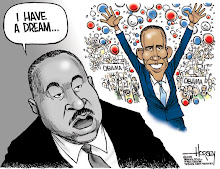











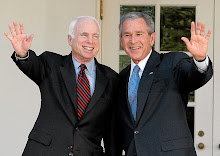



 Posts
Posts

