
Palin Misquotes Albright: "Place In Hell Reserved For Women Who Don't Support Other Women"
By Nico Pitney
pitney@huffingtonpost.com
October 5, 2008 01:16 AM
At a rally on Saturday in California, Sarah Palin offered up a rather jarring argument for supporting the Republican ticket. "There's a place in Hell reserved for women who don't support other women," the Alaska Governor said, claiming she was quoting former Clinton Secretary of State Madeleine Albright.
The statement came after Palin had recounted a "providential" moment she experienced on Saturday: "I'm reading on my Starbucks mocha cup, okay? The quote of the day... It was Madeleine Albright, former Secretary of State [crowd boos] and UN ambassador. ... Now she said it, I didn't. She said, 'There's a place in Hell reserved for women who don't support other women.'"
Actually, Albright didn't say that. The accurate quote is, "There's a place in Hell reserved for women who don't help other women." (Sources made the same point to CBS's Scott Conroy.)
Palin seemed to realize that the line could be viewed as grating. As the audience cheered, she remarked: "Okay, now, thank you so much for receiving that well. I didn't know how that was gonna go over. And now, California, let's see what a comment like I just made, how that is turned into whatever it'll be turned into tomorrow with the newspaper."
Albright responded to Palin's remarks in a statement to the Huffington Post on Sunday. "Though I am flattered that Governor Palin has chosen to cite me as a source of wisdom, what I said had nothing to do with politics. This is yet another example of McCain and Palin distorting the truth, and all the more reason to remember that this campaign is not about gender, it is about which candidate has an agenda that will improve the lives of all Americans, including women. The truth is, if you care about the status of women in our society and in our troubled economy, the best choice by far is Obama-Biden."
Sunday, October 5, 2008


AP: Palin's Ayers Attack "Racially Tinged"
Huffington Post
DOUGLASS K. DANIEL | October 5, 2008 08:52 PM EST |
WASHINGTON — By claiming that Democrat Barack Obama is "palling around with terrorists" and doesn't see the U.S. like other Americans, vice presidential candidate Sarah Palin targeted key goals for a faltering campaign.
And though she may have scored a political hit each time, her attack was unsubstantiated and carried a racially tinged subtext that John McCain himself may come to regret.
First, Palin's attack shows that her energetic debate with rival Joe Biden may be just the beginning, not the end, of a sharpened role in the battle to win the presidency.
"Our opponent ... is someone who sees America, it seems, as being so imperfect, imperfect enough, that he's palling around with terrorists who would target their own country," Palin told a group of donors in Englewood, Colo. A deliberate attempt to smear Obama, McCain's ticket-mate echoed the line at three separate events Saturday.
"This is not a man who sees America like you and I see America," she said. "We see America as a force of good in this world. We see an America of exceptionalism."
Obama isn't above attacking McCain's character with loaded words, releasing an ad on Sunday that calls the Arizona Republican "erratic" _ a hard-to miss suggestion that McCain's age, 72, might be an issue.
"Our financial system in turmoil," an announcer says in Obama's new ad. "And John McCain? Erratic in a crisis. Out of touch on the economy."
A harsh and plainly partisan judgment, certainly, but not on the level of suggesting that a fellow senator is un-American and even a friend of terrorists.
Story continues below
In her character attack, Palin questions Obama's association with William Ayers, a member of the Vietnam-era Weather Underground. Her reference was exaggerated at best if not outright false. No evidence shows they were "pals" or even close when they worked on community boards years ago and Ayers hosted a political event for Obama early in his career.
Obama, who was a child when the Weathermen were planting bombs, has denounced Ayers' radical views and actions.
With her criticism, Palin is taking on the running mate's traditional role of attacker, said Rich Galen, a Republican strategist.
"There appears to be a newfound sense of confidence in Sarah Palin as a candidate, given her performance the other night," Galen said. "I think that they are comfortable enough with her now that she's got the standing with the electorate to take off after Obama."
Second, Palin's incendiary charge draws media and voter attention away from the worsening economy. It also comes after McCain supported a pork-laden Wall Street bailout plan in spite of conservative anger and his own misgivings.
"It's a giant changing of the subject," said Jenny Backus, a Democratic strategist. "The problem is the messenger. If you want to start throwing fire bombs, you don't send out the fluffy bunny to do it. I think people don't take Sarah Palin seriously."
The larger purpose behind Palin's broadside is to reintroduce the question of Obama's associations. Millions of voters, many of them open to being swayed to one side or the other, are starting to pay attention to an election a month away.
For the McCain campaign, that makes Obama's ties to Ayers as well as convicted felon Antoin "Tony" Rezko and the controversial minister Jeremiah Wright ripe for renewed criticism. And Palin brings a fresh voice to the argument.
Effective character attacks have come earlier in campaigns. In June 1988, Republican George H.W. Bush criticized Democrat Michael Dukakis over the furlough granted to Willie Horton, a convicted murderer who then raped a woman and stabbed her companion. Related TV ads followed in September and October.
The Vietnam-era Swift Boat veterans who attacked Democrat John Kerry's war record started in the spring of 2004 and gained traction in late summer.
"The four weeks that are left are an eternity. There's plenty of time in the campaign," said Republican strategist Joe Gaylord. "I think it is a legitimate strategy to talk about Obama and to talk about his background and who he pals around with."
Palin's words avoid repulsing voters with overt racism. But is there another subtext for creating the false image of a black presidential nominee "palling around" with terrorists while assuring a predominantly white audience that he doesn't see their America?
In a post-Sept. 11 America, terrorists are envisioned as dark-skinned radical Muslims, not the homegrown anarchists of Ayers' day 40 years ago. With Obama a relative unknown when he began his campaign, the Internet hummed with false e-mails about ties to radical Islam of a foreign-born candidate.
Whether intended or not by the McCain campaign, portraying Obama as "not like us" is another potential appeal to racism. It suggests that the Hawaiian-born Christian is, at heart, un-American.
The fact is that when racism creeps into the discussion, it serves a purpose for McCain. As the fallout from Wright's sermons showed earlier this year, forcing Obama to abandon issues to talk about race leads to unresolved arguments about America's promise to treat all people equally.
John McCain occasionally says he looks back on decisions with regret. He has apologized for opposing a holiday to honor Martin Luther King Jr. He has apologized for refusing to call for the removal of a Confederate flag from South Carolina's Capitol.
When the 2008 campaign is over will McCain say he regrets appeals such as Palin's? ___
EDITOR'S NOTE _ Douglass K. Daniel is a writer and editor with the Washington bureau of The Associated Press.
DOUGLASS K. DANIEL | October 5, 2008 08:52 PM EST |
WASHINGTON — By claiming that Democrat Barack Obama is "palling around with terrorists" and doesn't see the U.S. like other Americans, vice presidential candidate Sarah Palin targeted key goals for a faltering campaign.
And though she may have scored a political hit each time, her attack was unsubstantiated and carried a racially tinged subtext that John McCain himself may come to regret.
First, Palin's attack shows that her energetic debate with rival Joe Biden may be just the beginning, not the end, of a sharpened role in the battle to win the presidency.
"Our opponent ... is someone who sees America, it seems, as being so imperfect, imperfect enough, that he's palling around with terrorists who would target their own country," Palin told a group of donors in Englewood, Colo. A deliberate attempt to smear Obama, McCain's ticket-mate echoed the line at three separate events Saturday.
"This is not a man who sees America like you and I see America," she said. "We see America as a force of good in this world. We see an America of exceptionalism."
Obama isn't above attacking McCain's character with loaded words, releasing an ad on Sunday that calls the Arizona Republican "erratic" _ a hard-to miss suggestion that McCain's age, 72, might be an issue.
"Our financial system in turmoil," an announcer says in Obama's new ad. "And John McCain? Erratic in a crisis. Out of touch on the economy."
A harsh and plainly partisan judgment, certainly, but not on the level of suggesting that a fellow senator is un-American and even a friend of terrorists.
Story continues below
In her character attack, Palin questions Obama's association with William Ayers, a member of the Vietnam-era Weather Underground. Her reference was exaggerated at best if not outright false. No evidence shows they were "pals" or even close when they worked on community boards years ago and Ayers hosted a political event for Obama early in his career.
Obama, who was a child when the Weathermen were planting bombs, has denounced Ayers' radical views and actions.
With her criticism, Palin is taking on the running mate's traditional role of attacker, said Rich Galen, a Republican strategist.
"There appears to be a newfound sense of confidence in Sarah Palin as a candidate, given her performance the other night," Galen said. "I think that they are comfortable enough with her now that she's got the standing with the electorate to take off after Obama."
Second, Palin's incendiary charge draws media and voter attention away from the worsening economy. It also comes after McCain supported a pork-laden Wall Street bailout plan in spite of conservative anger and his own misgivings.
"It's a giant changing of the subject," said Jenny Backus, a Democratic strategist. "The problem is the messenger. If you want to start throwing fire bombs, you don't send out the fluffy bunny to do it. I think people don't take Sarah Palin seriously."
The larger purpose behind Palin's broadside is to reintroduce the question of Obama's associations. Millions of voters, many of them open to being swayed to one side or the other, are starting to pay attention to an election a month away.
For the McCain campaign, that makes Obama's ties to Ayers as well as convicted felon Antoin "Tony" Rezko and the controversial minister Jeremiah Wright ripe for renewed criticism. And Palin brings a fresh voice to the argument.
Effective character attacks have come earlier in campaigns. In June 1988, Republican George H.W. Bush criticized Democrat Michael Dukakis over the furlough granted to Willie Horton, a convicted murderer who then raped a woman and stabbed her companion. Related TV ads followed in September and October.
The Vietnam-era Swift Boat veterans who attacked Democrat John Kerry's war record started in the spring of 2004 and gained traction in late summer.
"The four weeks that are left are an eternity. There's plenty of time in the campaign," said Republican strategist Joe Gaylord. "I think it is a legitimate strategy to talk about Obama and to talk about his background and who he pals around with."
Palin's words avoid repulsing voters with overt racism. But is there another subtext for creating the false image of a black presidential nominee "palling around" with terrorists while assuring a predominantly white audience that he doesn't see their America?
In a post-Sept. 11 America, terrorists are envisioned as dark-skinned radical Muslims, not the homegrown anarchists of Ayers' day 40 years ago. With Obama a relative unknown when he began his campaign, the Internet hummed with false e-mails about ties to radical Islam of a foreign-born candidate.
Whether intended or not by the McCain campaign, portraying Obama as "not like us" is another potential appeal to racism. It suggests that the Hawaiian-born Christian is, at heart, un-American.
The fact is that when racism creeps into the discussion, it serves a purpose for McCain. As the fallout from Wright's sermons showed earlier this year, forcing Obama to abandon issues to talk about race leads to unresolved arguments about America's promise to treat all people equally.
John McCain occasionally says he looks back on decisions with regret. He has apologized for opposing a holiday to honor Martin Luther King Jr. He has apologized for refusing to call for the removal of a Confederate flag from South Carolina's Capitol.
When the 2008 campaign is over will McCain say he regrets appeals such as Palin's? ___
EDITOR'S NOTE _ Douglass K. Daniel is a writer and editor with the Washington bureau of The Associated Press.
Saturday, October 4, 2008
Palin's neighbor who hasn't voted since McCarthy, is voting Obama!
Back home, Palin lives model life in Last Frontier
By GARANCE BURKE (Associated Press Writer)
From Associated Press
October 04, 2008 10:45 AM EDT
WASILLA, Alaska - To people in this hard-scrabble region tucked between two soaring mountain ranges, Gov. Sarah Palin is a working-class heroine. As the Republican vice presidential candidate's star rises nationally, she's increasingly held up as the model for life in the Last Frontier.
Palin and her husband, Todd, a champion snowmobiler racer, have all the trappings of that life: a coveted permit to fish salmon-rich Bristol Bay, a vast gun collection, a vintage float-plane and a fleet of gas-powered vehicles to roar through the wilderness.
"Everyone hunts and fishes here, but it's just that few people look so good doing it as Todd and Sarah," said David Parks, a 27-year-old Republican who has known Sarah Palin since he was a child and is volunteering for her campaign. "What attracts people is they have the plane, the snow machines and the whole lifestyle."
Others, though, object to the governor's readiness to equate her conservative values with the Alaskan way of life.
"Sarah's got all the toys to be marketed as the Alaska wilderness woman, but the reality is that she's been in that uppercrust for a while," said John Gourley, who with his wife, Jennifer, raised three children in a generator-powered cabin near Wasilla. "Plus, she's a trophy hunter, and I tend to respect people who shoot a moose because they need the meat."
Gourley said he hasn't voted for a presidential candidate since liberal Sen. Eugene McCarthy but now plans to vote for Democrat Barack Obama.
Even before McCain chose Palin as his running mate, she had appeared in magazines like Vogue - where she's shot in a long wrap, striding on the tundra - and in local brochures aimed at new arrivals to Wasilla that tout "tours of local dog mushing kennels and local farms, trips to glaciers and musk ox farms are part of the local fun."
"First Dude" Todd Palin is also a local celebrity, having won four medals in the Iron Dog, a grueling 55-hour snowmobile race that follows the 2,000-mile Iditarod Trail from Wasilla to Fairbanks.
"They're competitive people, and you can judge their level of sport by how hard they go at it all," said his longtime racing partner, Scott Davis. "You're trying to raise a family and run a company and race and be in politics? That takes a lot of dedication."
The family's seasonal working arrangement - common to many rural Alaskans - has earned them a relatively affluent life in the sprawling Matanuska-Sisutna region 40 miles north of Anchorage, where many roads are still dirt and some houses lack indoor plumbing.
"A huge part of Sarah Palin's appeal is that people see her as an ordinary person," said Dianne Woodruff, the lone nonpartisan member of Wasilla's Republican-dominated city council. "Truthfully, though, she's been a very fortunate ordinary person."
As governor, Palin draws a $125,000 annual salary. Todd Palin's self-employment in 2007 brought him $66,893 in gross receipts from fishing and snowmachine racing, though tax returns released Friday show an overall net income of only $5,874 after deductions. He also earned $43,519 working part-time on the North Slope for BP Exploration.
In the past two decades, the Palins have owned 43 vehicles, including at least 17 snowmobiles. In 2000, the most recent year for which information is available, there were 33,576 registered snowmobiles for a total of 221,600 Alaskan households, which means the average household did not have even one snowmobile, according to the Division of Motor Vehicles and the U.S. Census Bureau.
Their large lakeside home - worth $526,800, according to the most recent assessment - sits on more than two acres and looks onto the jutting Chugiak Mountains and groves of white birch.
Tied to the deck is their red-and-white Piper Cub plane, an outdoorsman's favorite that can be outfitted with skis in winter to fish on frozen lakes.
Local Democrats caution that just because Sarah Palin can butcher a moose doesn't mean she's prepared to be vice president.
But this is Alaska. Palin bagged her first bunny when she was 10, and her family proudly circulated a photograph of Palin posing over a caribou she shot a day after she was nominated for vice president.
By GARANCE BURKE (Associated Press Writer)
From Associated Press
October 04, 2008 10:45 AM EDT
WASILLA, Alaska - To people in this hard-scrabble region tucked between two soaring mountain ranges, Gov. Sarah Palin is a working-class heroine. As the Republican vice presidential candidate's star rises nationally, she's increasingly held up as the model for life in the Last Frontier.
Palin and her husband, Todd, a champion snowmobiler racer, have all the trappings of that life: a coveted permit to fish salmon-rich Bristol Bay, a vast gun collection, a vintage float-plane and a fleet of gas-powered vehicles to roar through the wilderness.
"Everyone hunts and fishes here, but it's just that few people look so good doing it as Todd and Sarah," said David Parks, a 27-year-old Republican who has known Sarah Palin since he was a child and is volunteering for her campaign. "What attracts people is they have the plane, the snow machines and the whole lifestyle."
Others, though, object to the governor's readiness to equate her conservative values with the Alaskan way of life.
"Sarah's got all the toys to be marketed as the Alaska wilderness woman, but the reality is that she's been in that uppercrust for a while," said John Gourley, who with his wife, Jennifer, raised three children in a generator-powered cabin near Wasilla. "Plus, she's a trophy hunter, and I tend to respect people who shoot a moose because they need the meat."
Gourley said he hasn't voted for a presidential candidate since liberal Sen. Eugene McCarthy but now plans to vote for Democrat Barack Obama.
Even before McCain chose Palin as his running mate, she had appeared in magazines like Vogue - where she's shot in a long wrap, striding on the tundra - and in local brochures aimed at new arrivals to Wasilla that tout "tours of local dog mushing kennels and local farms, trips to glaciers and musk ox farms are part of the local fun."
"First Dude" Todd Palin is also a local celebrity, having won four medals in the Iron Dog, a grueling 55-hour snowmobile race that follows the 2,000-mile Iditarod Trail from Wasilla to Fairbanks.
"They're competitive people, and you can judge their level of sport by how hard they go at it all," said his longtime racing partner, Scott Davis. "You're trying to raise a family and run a company and race and be in politics? That takes a lot of dedication."
The family's seasonal working arrangement - common to many rural Alaskans - has earned them a relatively affluent life in the sprawling Matanuska-Sisutna region 40 miles north of Anchorage, where many roads are still dirt and some houses lack indoor plumbing.
"A huge part of Sarah Palin's appeal is that people see her as an ordinary person," said Dianne Woodruff, the lone nonpartisan member of Wasilla's Republican-dominated city council. "Truthfully, though, she's been a very fortunate ordinary person."
As governor, Palin draws a $125,000 annual salary. Todd Palin's self-employment in 2007 brought him $66,893 in gross receipts from fishing and snowmachine racing, though tax returns released Friday show an overall net income of only $5,874 after deductions. He also earned $43,519 working part-time on the North Slope for BP Exploration.
In the past two decades, the Palins have owned 43 vehicles, including at least 17 snowmobiles. In 2000, the most recent year for which information is available, there were 33,576 registered snowmobiles for a total of 221,600 Alaskan households, which means the average household did not have even one snowmobile, according to the Division of Motor Vehicles and the U.S. Census Bureau.
Their large lakeside home - worth $526,800, according to the most recent assessment - sits on more than two acres and looks onto the jutting Chugiak Mountains and groves of white birch.
Tied to the deck is their red-and-white Piper Cub plane, an outdoorsman's favorite that can be outfitted with skis in winter to fish on frozen lakes.
Local Democrats caution that just because Sarah Palin can butcher a moose doesn't mean she's prepared to be vice president.
But this is Alaska. Palin bagged her first bunny when she was 10, and her family proudly circulated a photograph of Palin posing over a caribou she shot a day after she was nominated for vice president.
Friday, October 3, 2008
Dare I believe Obama can win?
By Courtney E. Martin
Fri Oct 3, 4:00 AM ET
Brooklyn, N.Y.
Like so many Americans, I feel as though I am holding my breath.
Could the quiet seed of joy that was planted in my heart the day I heard Barack Obama speak for the first time take root and grow without fear of the brutal storms of disappointment?
Could a leader that evokes awe in me actually win a presidential election? Could the beauty – and logic – of his words win over the majority of this country's voters? Could they see past the lies and distractions to the center of a human being who sincerely wants to invoke citizens' higher selves?
Could a system that seems so broken, so moneyed, so corrupt actually serve to help the American people elect an authentic, complex thinker? Could it be that – despite all that is wrong with the electoral process – there is enough right to allow a thoughtful candidate to get through the muck and emerge earnest and excited to lead?
Could the inspirational, not aspirational, America that I was raised to believe in – Eleanor Roosevelt with her Universal Declaration of Human Rights, Martin Luther King Jr. with his dream, and John F. Kennedy with his "ask not" encouragement – be the America that I live in?
And finally, and perhaps most profoundly, could this country reflect the best within me?
There is part of me, I admit, that is fearful and self-focused and, worst of all, cynical. She understands why people stay home from the polls. But there is another part of me that is courageous and compassionate and, best of all, idealistic. If Senator Obama is elected, I feel as though that best part of me – the best part of all of us – will be given permission to lead.
As Nov. 4 nears, I feel heavy with internal struggle and dangerous anticipation.
I have never voted for a presidential candidate who has won, much less in an election that wasn't considered potentially corrupt. I have never gone to sleep on Election Day with a sense of accomplishment, with the satisfying congruency of my values and those of the country's leader merging as one.
I have never woken up the next day without a deep, wide sadness, without a sense that my country doesn't reflect my dearest beliefs, that it actually mocks my youthful enthusiasm for the political process and commitment to following my political heart.
Now I watch Obama, a leader who articulates my own ideas and intuitions with the most eloquent grace, on the brink of a presidential miracle. His words about the critical nature of cohesive community, about injustice, about personal responsibility ring so true in my ears. But I'm scared to believe.
I don't think that Obama is a "messiah." I know that he has flaws, that he will fail in many ways, that the space between his ideals and his actions will often gape with a discomfiting hypocrisy, or at the very least, inefficiency.
But I am almost certain that he is good deep down, that he believes, as I do, that we could do better, that we could be better, that we are – when stripped of bureaucracy and alienation and skepticism – already better.
It is not his inevitable fall from grace that I fear. It is the possibility that on Nov. 4, I will find out that my acute craving for a kind and complex leader is not shared by the majority of Americans. That conclusion to this breathtaking story would tempt me, not just to be alienated from American politics, but from the American people. I fear that the worst part of me would bully the best part with cruel words: "I told you so. Hope is dangerous and naive."
But what would Obama himself say to that sentiment? I imagine he'd stay calm, in his top-of-the-lake-on-a-still-day kind of way. He'd remind me that his candidacy was never about him, but about me, about all of us. That it isn't his victory that confirms America's greatness, nor his defeat that disproves it; it's our own capacity to be resilient and committed to change every day, in all sorts of quiet, nonpresidential ways.
If Obama is elected, if I am invited to rejoice with the majority of Americans, the best part of me will have a chance to smile triumphantly at the worst.
Sometimes you believe in someone and they inspire you right back. Sometimes kindness and wisdom triumph over fear and brutality. Sometimes this country is as amazing as your wildest imagination of it.
• Courtney E. Martin is the author of "Perfect Girls, Starving Daughters" and a columnist for The American Prospect Online.
Fri Oct 3, 4:00 AM ET
Brooklyn, N.Y.
Like so many Americans, I feel as though I am holding my breath.
Could the quiet seed of joy that was planted in my heart the day I heard Barack Obama speak for the first time take root and grow without fear of the brutal storms of disappointment?
Could a leader that evokes awe in me actually win a presidential election? Could the beauty – and logic – of his words win over the majority of this country's voters? Could they see past the lies and distractions to the center of a human being who sincerely wants to invoke citizens' higher selves?
Could a system that seems so broken, so moneyed, so corrupt actually serve to help the American people elect an authentic, complex thinker? Could it be that – despite all that is wrong with the electoral process – there is enough right to allow a thoughtful candidate to get through the muck and emerge earnest and excited to lead?
Could the inspirational, not aspirational, America that I was raised to believe in – Eleanor Roosevelt with her Universal Declaration of Human Rights, Martin Luther King Jr. with his dream, and John F. Kennedy with his "ask not" encouragement – be the America that I live in?
And finally, and perhaps most profoundly, could this country reflect the best within me?
There is part of me, I admit, that is fearful and self-focused and, worst of all, cynical. She understands why people stay home from the polls. But there is another part of me that is courageous and compassionate and, best of all, idealistic. If Senator Obama is elected, I feel as though that best part of me – the best part of all of us – will be given permission to lead.
As Nov. 4 nears, I feel heavy with internal struggle and dangerous anticipation.
I have never voted for a presidential candidate who has won, much less in an election that wasn't considered potentially corrupt. I have never gone to sleep on Election Day with a sense of accomplishment, with the satisfying congruency of my values and those of the country's leader merging as one.
I have never woken up the next day without a deep, wide sadness, without a sense that my country doesn't reflect my dearest beliefs, that it actually mocks my youthful enthusiasm for the political process and commitment to following my political heart.
Now I watch Obama, a leader who articulates my own ideas and intuitions with the most eloquent grace, on the brink of a presidential miracle. His words about the critical nature of cohesive community, about injustice, about personal responsibility ring so true in my ears. But I'm scared to believe.
I don't think that Obama is a "messiah." I know that he has flaws, that he will fail in many ways, that the space between his ideals and his actions will often gape with a discomfiting hypocrisy, or at the very least, inefficiency.
But I am almost certain that he is good deep down, that he believes, as I do, that we could do better, that we could be better, that we are – when stripped of bureaucracy and alienation and skepticism – already better.
It is not his inevitable fall from grace that I fear. It is the possibility that on Nov. 4, I will find out that my acute craving for a kind and complex leader is not shared by the majority of Americans. That conclusion to this breathtaking story would tempt me, not just to be alienated from American politics, but from the American people. I fear that the worst part of me would bully the best part with cruel words: "I told you so. Hope is dangerous and naive."
But what would Obama himself say to that sentiment? I imagine he'd stay calm, in his top-of-the-lake-on-a-still-day kind of way. He'd remind me that his candidacy was never about him, but about me, about all of us. That it isn't his victory that confirms America's greatness, nor his defeat that disproves it; it's our own capacity to be resilient and committed to change every day, in all sorts of quiet, nonpresidential ways.
If Obama is elected, if I am invited to rejoice with the majority of Americans, the best part of me will have a chance to smile triumphantly at the worst.
Sometimes you believe in someone and they inspire you right back. Sometimes kindness and wisdom triumph over fear and brutality. Sometimes this country is as amazing as your wildest imagination of it.
• Courtney E. Martin is the author of "Perfect Girls, Starving Daughters" and a columnist for The American Prospect Online.
Thursday, October 2, 2008
Welcome To Sarahland
Art Brodsky
Posted October 2, 2008 | 11:22 PM (EST)
Huffington Post
Welcome to Sarahland. It's a magical place, where the sun always shines, everything is just perfect and where reality is simply an optional mode of existence.
We all got a little tour tonight through Sarahland, as Alaska's Republican governor Sarah Palin, who successfully buried a bipartisan investigation of her actions firing the state's top cop, pledged to the altar of bipartisanship.
In Sarahland, answering questions asked to you is optional. You say what you want to say, regardless of what that old-school questioner has to offer. Want to talk about education, or taxes? Go right ahead. It doesn't matter what the question is. She cheerfully admitted she won't answer the question the moderator, Gwen Ifill, wants to ask or even stick to the topics Ifill wants the candidates to discuss.
Have a few talking points you want repeat endlessly, regardless of whether they are true? Go right ahead. Talk about Barack Obama's not funding the troops. Talk about Barack Obama's raising taxes. Talk about the importance of drilling (Drill, Baby, Drill.) Why should facts be able to intrude on one's permanent sunny disposition? What does it matter if John McCain also voted against funding the troops if you can wink at the camera and sound like down-home gotcha Alaska? What does it matter if you continually mis-state Obama's tax play if you can recite homilies about the greatness of America without getting down to specifics and wave the bloody image of the "white flag of surrender"? What does it matter if John McCain opposed alternative fuels? One just plows ahead on perkiness.
In Sarahland, one gets props for pronouncing correctly the names of foreign leaders, even if they are not the right leaders to be discussing. In Sarahland, one can interpret the Constitution as one wishes, regardless of whether that interpretation has any merit. In Sarahland, inconvenient truths like taxing of health benefits can simply be wished away.
In Sarahland, every question is an opportunity for the pageant contestant to look perky, to take her best shot and to exude confidence - even if nothing the contestant says has anything to do with the discussion at hand. In Sarahland, winks and nods and aphorisms are enough to carry a spunky person through the worst of times - like an hour and a half of being schooled by someone older, smarter and more polished and more informed.
Sarahland occasionally welcomes visitors to its borders. Pat Buchanan must have had his passport stamped, because he came out and said flatly that Palin won the debate. Sarahland bears an important similarity to another cult in this country, although in its cultishness only, not in the merits. Ask anyone who has a piece of fruit stamped on a computer, and you will have someone who will readily acknowledge the existence of the Steve Jobs Reality Distortion Field. At least those people have the judgment to recognize the existence of that field. In Sarahland, there is no such measure of being self aware.
The good thing about Sarahland is that any rules can apply that one wants to apply. Sarah Palin clearly won the debate. She stuck to her talking points, she made eye contact with the audience. She didn't look panicked, at least not too often. She used her pageant and TV training to bluff and blunder her way through answers.
For those of us who haven't had our passport stamped, however, the evening turned out very differently. We saw the difference between a pro and am amateur. That might have been Joe Biden's best night ever. He matched Palin emotion for emotion, Main Street for Main Street. And he trumped her everywhere else -- on experience, on facts, on analysis of domestic and foreign situations.
Biden in fact could have taken Palin out at any number of occasions during the debate. He didn't smack her "management" experience with the said note that she left her town $20 million in debt. He didn't note the earmarks she requested contributed to that spending she abhors. He didn't note that the pipeline she supports goes through Canada. He stayed on message, hitting on John McCain's record. He did make her look absolutely lost when Palin tried to give her version of the Reagan, "there you go again" line by scolding Biden on looking too much to the past, and not to the future to find solutions to problems. Biden, correctly, replied that to find the solutions to global warming, you have to look at the causes. He said that the policies of John McCain wouldn't differ from those of George Bush. One has to know the past to deal with the future. It's a wise view of the world, one not familiar in Sarahland.
Look at the split screen when Biden delivered his closing statement. For a moment or two, he broke through the reality distortion field and Palin saw what she was competing against -- someone who was better than she is in every way. It was but a glimmer, then it was back to Sarahland, where everything is peachy keen, you betcha.
Posted October 2, 2008 | 11:22 PM (EST)
Huffington Post
Welcome to Sarahland. It's a magical place, where the sun always shines, everything is just perfect and where reality is simply an optional mode of existence.
We all got a little tour tonight through Sarahland, as Alaska's Republican governor Sarah Palin, who successfully buried a bipartisan investigation of her actions firing the state's top cop, pledged to the altar of bipartisanship.
In Sarahland, answering questions asked to you is optional. You say what you want to say, regardless of what that old-school questioner has to offer. Want to talk about education, or taxes? Go right ahead. It doesn't matter what the question is. She cheerfully admitted she won't answer the question the moderator, Gwen Ifill, wants to ask or even stick to the topics Ifill wants the candidates to discuss.
Have a few talking points you want repeat endlessly, regardless of whether they are true? Go right ahead. Talk about Barack Obama's not funding the troops. Talk about Barack Obama's raising taxes. Talk about the importance of drilling (Drill, Baby, Drill.) Why should facts be able to intrude on one's permanent sunny disposition? What does it matter if John McCain also voted against funding the troops if you can wink at the camera and sound like down-home gotcha Alaska? What does it matter if you continually mis-state Obama's tax play if you can recite homilies about the greatness of America without getting down to specifics and wave the bloody image of the "white flag of surrender"? What does it matter if John McCain opposed alternative fuels? One just plows ahead on perkiness.
In Sarahland, one gets props for pronouncing correctly the names of foreign leaders, even if they are not the right leaders to be discussing. In Sarahland, one can interpret the Constitution as one wishes, regardless of whether that interpretation has any merit. In Sarahland, inconvenient truths like taxing of health benefits can simply be wished away.
In Sarahland, every question is an opportunity for the pageant contestant to look perky, to take her best shot and to exude confidence - even if nothing the contestant says has anything to do with the discussion at hand. In Sarahland, winks and nods and aphorisms are enough to carry a spunky person through the worst of times - like an hour and a half of being schooled by someone older, smarter and more polished and more informed.
Sarahland occasionally welcomes visitors to its borders. Pat Buchanan must have had his passport stamped, because he came out and said flatly that Palin won the debate. Sarahland bears an important similarity to another cult in this country, although in its cultishness only, not in the merits. Ask anyone who has a piece of fruit stamped on a computer, and you will have someone who will readily acknowledge the existence of the Steve Jobs Reality Distortion Field. At least those people have the judgment to recognize the existence of that field. In Sarahland, there is no such measure of being self aware.
The good thing about Sarahland is that any rules can apply that one wants to apply. Sarah Palin clearly won the debate. She stuck to her talking points, she made eye contact with the audience. She didn't look panicked, at least not too often. She used her pageant and TV training to bluff and blunder her way through answers.
For those of us who haven't had our passport stamped, however, the evening turned out very differently. We saw the difference between a pro and am amateur. That might have been Joe Biden's best night ever. He matched Palin emotion for emotion, Main Street for Main Street. And he trumped her everywhere else -- on experience, on facts, on analysis of domestic and foreign situations.
Biden in fact could have taken Palin out at any number of occasions during the debate. He didn't smack her "management" experience with the said note that she left her town $20 million in debt. He didn't note the earmarks she requested contributed to that spending she abhors. He didn't note that the pipeline she supports goes through Canada. He stayed on message, hitting on John McCain's record. He did make her look absolutely lost when Palin tried to give her version of the Reagan, "there you go again" line by scolding Biden on looking too much to the past, and not to the future to find solutions to problems. Biden, correctly, replied that to find the solutions to global warming, you have to look at the causes. He said that the policies of John McCain wouldn't differ from those of George Bush. One has to know the past to deal with the future. It's a wise view of the world, one not familiar in Sarahland.
Look at the split screen when Biden delivered his closing statement. For a moment or two, he broke through the reality distortion field and Palin saw what she was competing against -- someone who was better than she is in every way. It was but a glimmer, then it was back to Sarahland, where everything is peachy keen, you betcha.
Joe's Tears: the Political Power of Paternal Love
Leah McElrath Renna
Posted October 2, 2008 | 11:16 PM (EST)
Huffington Post
Joe Biden did more for the equality of the sexes with his honest display of paternal emotion during the vice presidential debate than Sarah Palin's presence on the executive ticket has or will ever do.
Biden visibly teared up when he rebutted the idea that "just because I am a man" he didn't understand what it was like to wonder whether or not a child would "make it" in recovering from a life-threatening medical situation. At the time, he was likely recalling the tragic automobile accident that killed his wife and daughter and severely injured his two sons. It was an authentic, moving and powerful moment. It was, in fact, the strongest expression of real paternal love we have seen from a public official in recent memory and maybe ever.
By bringing that reality to a national political stage, Biden demonstrated that -- for all of us, not just feminists -- the personal is political, that women alone do not have the sole responsibility for caring about the future of our children and that the concern of fathers is a largely untapped pool of political energy. In his acceptance speech, Barack Obama paved the way for this when he talked about fighting for equal pay for equal work because he wants "my daughters to have the same opportunities as your sons" -- and said this while looking with protective ferocity straight into the camera. He has continued this message on the campaign trail with great impact.
Political equality for women will not come from the minimization or idealization of motherhood -- but rather from recognizing fatherhood as a significant factor in our culture and politics.
Thank you, Joe, for bringing us to the next level and keeping it real.
Posted October 2, 2008 | 11:16 PM (EST)
Huffington Post
Joe Biden did more for the equality of the sexes with his honest display of paternal emotion during the vice presidential debate than Sarah Palin's presence on the executive ticket has or will ever do.
Biden visibly teared up when he rebutted the idea that "just because I am a man" he didn't understand what it was like to wonder whether or not a child would "make it" in recovering from a life-threatening medical situation. At the time, he was likely recalling the tragic automobile accident that killed his wife and daughter and severely injured his two sons. It was an authentic, moving and powerful moment. It was, in fact, the strongest expression of real paternal love we have seen from a public official in recent memory and maybe ever.
By bringing that reality to a national political stage, Biden demonstrated that -- for all of us, not just feminists -- the personal is political, that women alone do not have the sole responsibility for caring about the future of our children and that the concern of fathers is a largely untapped pool of political energy. In his acceptance speech, Barack Obama paved the way for this when he talked about fighting for equal pay for equal work because he wants "my daughters to have the same opportunities as your sons" -- and said this while looking with protective ferocity straight into the camera. He has continued this message on the campaign trail with great impact.
Political equality for women will not come from the minimization or idealization of motherhood -- but rather from recognizing fatherhood as a significant factor in our culture and politics.
Thank you, Joe, for bringing us to the next level and keeping it real.
Wednesday, October 1, 2008
AP Investigation: Palin practiced small-town politics to help friends, neighbors and , herself
WPIX News
By BRETT J. BLACKLEDGE
WASILLA, Alaska (AP) _ Though Sarah Palin depicts herself as a pit bull fighting good-old-boy politics, in her years as mayor she and her friends received special benefits more typical of small-town politics as usual, an Associated Press investigation shows.
When Palin needed to sell her house during her last year as Wasilla mayor, she got the city to sign off on a special zoning exception — and did so without keeping a promise to remove a potential fire hazard.
She gladly accepted gifts from merchants: A free "awesome facial" she raved about in a thank-you note to a spa. The "absolutely gorgeous flowers" she received from a welding supply store. Even fresh salmon to take home.
She also stepped in to help friends or neighbors with City Hall dealings. She asked the City Council to add a friend to the list of speakers at a 2002 meeting — and then the friend got up and asked them to give his radio station advertising business.
That year, records show, she tried to help a neighbor and political contributor fighting City Hall over his small lakeside development. Palin wanted the city to refund some of the man's fees, but the city attorney told the mayor she didn't have the authority.
Palin claims she has more executive experience than her opponent and the two presidential candidates, but most of those years were spent running a city with a population of less than 7,000.
Some of her first actions after being elected mayor in 1996 raised possible ethical red flags: She cast the tie-breaking vote to propose a tax exemption on aircraft when her father-in-law owned one, and backed the city's repeal of all taxes a year later on planes, snow machines and other personal property. She also asked the council to consider looser rules for snow machine races. Palin and her husband, Todd, a champion racer, co-owned a snow machine store at the time.
Palin often told the City Council of her personal involvement in such issues, but that didn't stop her from pressing them, according to minutes of council meetings.
She sometimes followed a cautious path in the face of real or potential conflicts — for example, stepping away from the table in 1997 when the council considered a grant for the Iron Dog snow machine race in which her husband competes.
But mostly, like other Wasilla elected officials at the time, she took an active role on issues that directly affected and sometimes benefited her. Her efforts to clear the way for the $327,000 sale of the Palin family home on Lake Wasilla is an example.
Two months before Palin's tenure as mayor ended in 2002, she asked city planning officials to forgive zoning violations so she could sell her house. Palin had a buyer, but he wouldn't close the deal unless she persuaded the city to waive the violations with a code variance.
The Palins, who were finishing work on a new waterfront house on Lake Lucille about two miles away, asked the city for the variance. The request was opposed by one planning official and some neighbors.
"I would ask that the Wasilla Planning Commission apply the exact same rules in this situation that it would apply to other similar requests so that our community can see that being a public figure does not give anyone special benefits," urged neighbor Clyde Boyer Jr. in a 2002 note to the city.
The Palins' house was built by the original owner too close to the shoreline and too close to adjacent properties on each side, including a carport that stretched so far over it nearly connected the two houses.
The Palins didn't create the zoning problems, but they should have known about them when they bought the house, wrote Susan Lee, a code compliance officer with the Matanuska-Susitna Borough, in response to the Palins' request. The borough, similar to a county government, makes recommendations to the city, which has final say.
Lee, in recommending the city reject the request, noted that the exception was needed to resolve an "inconvenience" the Palins experienced while trying to sell their house. In 1989, another borough planner told a previous owner that a variance for the carport couldn't be approved because it didn't meet required conditions and was a potential fire hazard.
But in August 2002, Wasilla Planner Tim Krug approved a "shoreline setback exception" for the Palins' house being built too closely to the water. He sent an e-mail to the mayor saying he was drafting another variance for the side of the house built too close to the property line, but that he understood from her that the other side "will be corrected and the carport will be removed."
Krug asked Palin to let him know if he was wrong in his impression that the carport would be removed.
A few minutes later, the mayor e-mailed back: "Sounds good."
On Sept. 10, 2002, the seven-member Wasilla Planning Commission unanimously approved a variance for both sides of the property, with language covering "all existing structures." Less than a week later, the Palins signed a deed to sell the house to Henry Nosek.
The carport was never removed.
Nosek said Sarah Palin didn't do anything more than any other citizen would have done.
"I sincerely don't feel that Sarah used her position as mayor at the time to get that accomplished," said Nosek, who no longer lives in the home.
James Svara, professor of public affairs at Arizona State University and author of "The Ethics Primer for Public Administrators in Government and Nonprofit Organizations," suggested such behavior is part of small-town politics.
"Small towns are first-person politics, and if people are close, it's hard to separate one's own personal interest and one's own personal property from the work of the city," Svara said. The key questions from an ethics standpoint include whether the politician makes a potential conflict of interest known and removes himself or herself from actions related to it, he added.
"I think in a small town there is a greater likelihood that people will accept that you will pay careful attention to friends and neighbors," he said, adding that there may be some local gossip about it, but not a lot of public scrutiny. "At the national level, there will be far more people watching, there will be far more pressures to come forward to try to influence the outcome."
___
Associated Press writer Sharon Theimer in Washington contributed to this report.
By BRETT J. BLACKLEDGE
WASILLA, Alaska (AP) _ Though Sarah Palin depicts herself as a pit bull fighting good-old-boy politics, in her years as mayor she and her friends received special benefits more typical of small-town politics as usual, an Associated Press investigation shows.
When Palin needed to sell her house during her last year as Wasilla mayor, she got the city to sign off on a special zoning exception — and did so without keeping a promise to remove a potential fire hazard.
She gladly accepted gifts from merchants: A free "awesome facial" she raved about in a thank-you note to a spa. The "absolutely gorgeous flowers" she received from a welding supply store. Even fresh salmon to take home.
She also stepped in to help friends or neighbors with City Hall dealings. She asked the City Council to add a friend to the list of speakers at a 2002 meeting — and then the friend got up and asked them to give his radio station advertising business.
That year, records show, she tried to help a neighbor and political contributor fighting City Hall over his small lakeside development. Palin wanted the city to refund some of the man's fees, but the city attorney told the mayor she didn't have the authority.
Palin claims she has more executive experience than her opponent and the two presidential candidates, but most of those years were spent running a city with a population of less than 7,000.
Some of her first actions after being elected mayor in 1996 raised possible ethical red flags: She cast the tie-breaking vote to propose a tax exemption on aircraft when her father-in-law owned one, and backed the city's repeal of all taxes a year later on planes, snow machines and other personal property. She also asked the council to consider looser rules for snow machine races. Palin and her husband, Todd, a champion racer, co-owned a snow machine store at the time.
Palin often told the City Council of her personal involvement in such issues, but that didn't stop her from pressing them, according to minutes of council meetings.
She sometimes followed a cautious path in the face of real or potential conflicts — for example, stepping away from the table in 1997 when the council considered a grant for the Iron Dog snow machine race in which her husband competes.
But mostly, like other Wasilla elected officials at the time, she took an active role on issues that directly affected and sometimes benefited her. Her efforts to clear the way for the $327,000 sale of the Palin family home on Lake Wasilla is an example.
Two months before Palin's tenure as mayor ended in 2002, she asked city planning officials to forgive zoning violations so she could sell her house. Palin had a buyer, but he wouldn't close the deal unless she persuaded the city to waive the violations with a code variance.
The Palins, who were finishing work on a new waterfront house on Lake Lucille about two miles away, asked the city for the variance. The request was opposed by one planning official and some neighbors.
"I would ask that the Wasilla Planning Commission apply the exact same rules in this situation that it would apply to other similar requests so that our community can see that being a public figure does not give anyone special benefits," urged neighbor Clyde Boyer Jr. in a 2002 note to the city.
The Palins' house was built by the original owner too close to the shoreline and too close to adjacent properties on each side, including a carport that stretched so far over it nearly connected the two houses.
The Palins didn't create the zoning problems, but they should have known about them when they bought the house, wrote Susan Lee, a code compliance officer with the Matanuska-Susitna Borough, in response to the Palins' request. The borough, similar to a county government, makes recommendations to the city, which has final say.
Lee, in recommending the city reject the request, noted that the exception was needed to resolve an "inconvenience" the Palins experienced while trying to sell their house. In 1989, another borough planner told a previous owner that a variance for the carport couldn't be approved because it didn't meet required conditions and was a potential fire hazard.
But in August 2002, Wasilla Planner Tim Krug approved a "shoreline setback exception" for the Palins' house being built too closely to the water. He sent an e-mail to the mayor saying he was drafting another variance for the side of the house built too close to the property line, but that he understood from her that the other side "will be corrected and the carport will be removed."
Krug asked Palin to let him know if he was wrong in his impression that the carport would be removed.
A few minutes later, the mayor e-mailed back: "Sounds good."
On Sept. 10, 2002, the seven-member Wasilla Planning Commission unanimously approved a variance for both sides of the property, with language covering "all existing structures." Less than a week later, the Palins signed a deed to sell the house to Henry Nosek.
The carport was never removed.
Nosek said Sarah Palin didn't do anything more than any other citizen would have done.
"I sincerely don't feel that Sarah used her position as mayor at the time to get that accomplished," said Nosek, who no longer lives in the home.
James Svara, professor of public affairs at Arizona State University and author of "The Ethics Primer for Public Administrators in Government and Nonprofit Organizations," suggested such behavior is part of small-town politics.
"Small towns are first-person politics, and if people are close, it's hard to separate one's own personal interest and one's own personal property from the work of the city," Svara said. The key questions from an ethics standpoint include whether the politician makes a potential conflict of interest known and removes himself or herself from actions related to it, he added.
"I think in a small town there is a greater likelihood that people will accept that you will pay careful attention to friends and neighbors," he said, adding that there may be some local gossip about it, but not a lot of public scrutiny. "At the national level, there will be far more people watching, there will be far more pressures to come forward to try to influence the outcome."
___
Associated Press writer Sharon Theimer in Washington contributed to this report.
Tuesday, September 30, 2008
This is a Palin absolute watch-This is the SCARIEST uncut video on Palin I have ever seen.
Please watch both videos. Very disturbing!
Synopsis-
Thomas Muthee, the man who led a movement that hounded a woman out of her hometown because Muthee believed she was supernaturally causing car crashes, has moved on. His new target: Sarah Palin. On October 16, 2005, Thomas Muthee delivered a sermon at the Wasilla Assemblies of God, the subject of which was "Why Palin?" Why Elect Sarah Palin Governor of Alaska? Ignore for the moment that church electioneering is against federal tax law. Let's focus on Thomas Muthee's reasons to vote for Sarah Palin. #1. Vote for Sarah Palin because she is one way for "God's Kingdom" to "invade," "infiltrate" and "influence" society. #2. Vote for Sarah Palin to install the Christian God and the Ten Commandments in control of the Public Schools. #3. Vote for Sarah Palin to combat and rebuke the forces of witchcraft. #4. Vote for Sarah Palin to end the separation of church and state in the United States of America. Thomas Muthee spoke it. Sarah Palin watched him speak it in the audience. Then she took the stage and as Muthee laid hands on her and she bowed her head, together they prayed for it. Is this what YOU want for America?
Synopsis-
Thomas Muthee, the man who led a movement that hounded a woman out of her hometown because Muthee believed she was supernaturally causing car crashes, has moved on. His new target: Sarah Palin. On October 16, 2005, Thomas Muthee delivered a sermon at the Wasilla Assemblies of God, the subject of which was "Why Palin?" Why Elect Sarah Palin Governor of Alaska? Ignore for the moment that church electioneering is against federal tax law. Let's focus on Thomas Muthee's reasons to vote for Sarah Palin. #1. Vote for Sarah Palin because she is one way for "God's Kingdom" to "invade," "infiltrate" and "influence" society. #2. Vote for Sarah Palin to install the Christian God and the Ten Commandments in control of the Public Schools. #3. Vote for Sarah Palin to combat and rebuke the forces of witchcraft. #4. Vote for Sarah Palin to end the separation of church and state in the United States of America. Thomas Muthee spoke it. Sarah Palin watched him speak it in the audience. Then she took the stage and as Muthee laid hands on her and she bowed her head, together they prayed for it. Is this what YOU want for America?
Palin, A Journalism Major, Can't Name A News Source She Reads
The Huffington Post
Sam Stein
September 30, 2008 08:15 PM
Sarah Palin said she does not support the morning after pill as a form of contraception, strongly implied that homosexuality was a choice, and could not name a single source of news that she turns to for information, in yet another installment of her interview series with Katie Couric.
Appearing on CBS Evening News, the Alaska Governor seemed calmer than she had been in previous sit downs. But while she only occasionally provided the type of befuddled responses that had even conservatives scratching their heads, her interview was nevertheless shaky.
Asked what newspapers and magazines she reads, Palin - a journalism major in college - could not name one publication.
"I've read most of them, again with a great appreciation for the press, for the media," she said at first. Couric responded, "What, specifically?"
"Um, all of them, any of them that have been in front of me all these years."
"Can you name a few?"
"I have a vast variety of source where we get our news," Palin said. "Alaska isn't a foreign country, where it's kind of suggested, 'wow, how could you keep in touch with what the rest of Washington, D.C., may be thinking when you live up there in Alaska?' Believe me, Alaska is like a microcosm of America."
Later, when pressed on a variety of cultural issues, Palin provided red meat for religious conservatives. But her answers seemed to fall on the far edge of mainstream political thought. She said she was "unapologetically" pro-life when asked if she opposed abortion even for a 15-year-old raped by her father.
"[I would] counsel that person to choose life despite the horrific, horrific circumstances," she said, before moderating her position a bit: "If you're asking, though, kind of foundationally here, should anyone end up in jail for having an ... abortion, absolutely not. That's nothing I would ever support."
Asked whether she believed that the morning after pill should be outlawed, Palin did not directly address the question, saying only: "Personally, and this isn't a McCain-Palin policy, I would not choose to participate in that kind of contraception."
And quizzed about her position on gay-rights, Palin cited a homosexual friend whom she is close with before noting that she "made a choice" about her sexuality.
"I have," she said, "one of my absolute best friends for the last 30 years who happens to be gay and I love her dearly. And she is not my gay friend. She is one of my best friends who happens to have made a choice that isn't a choice that I would have made."
These positions may, in the long run, endear Palin even more to her conservative following. But combined with her failure to name a source of news she turns to, they are also bound to have people buzzing up through Thursday night's vice presidential debate.
Sam Stein
September 30, 2008 08:15 PM
Sarah Palin said she does not support the morning after pill as a form of contraception, strongly implied that homosexuality was a choice, and could not name a single source of news that she turns to for information, in yet another installment of her interview series with Katie Couric.
Appearing on CBS Evening News, the Alaska Governor seemed calmer than she had been in previous sit downs. But while she only occasionally provided the type of befuddled responses that had even conservatives scratching their heads, her interview was nevertheless shaky.
Asked what newspapers and magazines she reads, Palin - a journalism major in college - could not name one publication.
"I've read most of them, again with a great appreciation for the press, for the media," she said at first. Couric responded, "What, specifically?"
"Um, all of them, any of them that have been in front of me all these years."
"Can you name a few?"
"I have a vast variety of source where we get our news," Palin said. "Alaska isn't a foreign country, where it's kind of suggested, 'wow, how could you keep in touch with what the rest of Washington, D.C., may be thinking when you live up there in Alaska?' Believe me, Alaska is like a microcosm of America."
Later, when pressed on a variety of cultural issues, Palin provided red meat for religious conservatives. But her answers seemed to fall on the far edge of mainstream political thought. She said she was "unapologetically" pro-life when asked if she opposed abortion even for a 15-year-old raped by her father.
"[I would] counsel that person to choose life despite the horrific, horrific circumstances," she said, before moderating her position a bit: "If you're asking, though, kind of foundationally here, should anyone end up in jail for having an ... abortion, absolutely not. That's nothing I would ever support."
Asked whether she believed that the morning after pill should be outlawed, Palin did not directly address the question, saying only: "Personally, and this isn't a McCain-Palin policy, I would not choose to participate in that kind of contraception."
And quizzed about her position on gay-rights, Palin cited a homosexual friend whom she is close with before noting that she "made a choice" about her sexuality.
"I have," she said, "one of my absolute best friends for the last 30 years who happens to be gay and I love her dearly. And she is not my gay friend. She is one of my best friends who happens to have made a choice that isn't a choice that I would have made."
These positions may, in the long run, endear Palin even more to her conservative following. But combined with her failure to name a source of news she turns to, they are also bound to have people buzzing up through Thursday night's vice presidential debate.
Monday, September 29, 2008
Palin Claimed Dinosaurs And People Coexisted:
The LA Times reports:
Soon after Sarah Palin was elected mayor of the foothill town of Wasilla, Alaska, she startled a local music teacher by insisting in casual conversation that men and dinosaurs coexisted on an Earth created 6,000 years ago -- about 65 million years after scientists say most dinosaurs became extinct -- the teacher said.
After conducting a college band and watching Palin deliver a commencement address to a small group of home-schooled students in June 1997, Wasilla resident Philip Munger said, he asked the young mayor about her religious beliefs.
Palin told him that "dinosaurs and humans walked the Earth at the same time," Munger said. When he asked her about prehistoric fossils and tracks dating back millions of years, Palin said "she had seen pictures of human footprints inside the tracks," recalled Munger, who teaches music at the University of Alaska in Anchorage and has regularly criticized Palin in recent years on his liberal political blog, called Progressive Alaska.
The idea of a "young Earth" -- that God created the Earth about 6,000 years ago, and dinosaurs and humans coexisted early on -- is a popular strain of creationism.
Though in her race for governor she called for faith-based "intelligent design" to be taught along with evolution in Alaska's schools, Gov. Palin has not sought to require it, state educators say.
In a widely-circulated interview, Matt Damon said of Palin, "I need to know if she really think that dinosaurs were here 4000 years ago. I want to know that, I really do. Because she's gonna have the nuclear codes."
Soon after Sarah Palin was elected mayor of the foothill town of Wasilla, Alaska, she startled a local music teacher by insisting in casual conversation that men and dinosaurs coexisted on an Earth created 6,000 years ago -- about 65 million years after scientists say most dinosaurs became extinct -- the teacher said.
After conducting a college band and watching Palin deliver a commencement address to a small group of home-schooled students in June 1997, Wasilla resident Philip Munger said, he asked the young mayor about her religious beliefs.
Palin told him that "dinosaurs and humans walked the Earth at the same time," Munger said. When he asked her about prehistoric fossils and tracks dating back millions of years, Palin said "she had seen pictures of human footprints inside the tracks," recalled Munger, who teaches music at the University of Alaska in Anchorage and has regularly criticized Palin in recent years on his liberal political blog, called Progressive Alaska.
The idea of a "young Earth" -- that God created the Earth about 6,000 years ago, and dinosaurs and humans coexisted early on -- is a popular strain of creationism.
Though in her race for governor she called for faith-based "intelligent design" to be taught along with evolution in Alaska's schools, Gov. Palin has not sought to require it, state educators say.
In a widely-circulated interview, Matt Damon said of Palin, "I need to know if she really think that dinosaurs were here 4000 years ago. I want to know that, I really do. Because she's gonna have the nuclear codes."
Tina Fey As Sarah Palin: Katie Couric SNL Skit (VIDEO)
Tina Fey returned to Saturday Night Live to reprise her widely hailed impersonation of Alaska Governor Sarah Palin.
The sketch mocks Palin's recent interview with CBS News' Katie Couric (played on SNL by Amy Poehler), touching on Palin's trip to New York and her comments about Russia and the financial bailout.
FEY AS PALIN: "Like every American I'm speaking with, we're ill about this. We're saying, 'Hey, why bail out Fanny and Freddie and not me?' But ultimately what the bailout does is, help those that are concerned about the healthcare reform that is needed to help shore up our economy to help...uh...it's gotta be all about job creation, too. Also, too, shoring up our economy and putting Fannie and Freddy back on the right track and so healthcare reform and reducing taxes and reigning in spending...'cause Barack Obama, y'know...has got to accompany tax reductions and tax relief for Americans, also, having a dollar value meal at restaurants. That's gonna help. But one in five jobs being created today under the umbrella of job creation. That, you know...Also..."
The sketch mocks Palin's recent interview with CBS News' Katie Couric (played on SNL by Amy Poehler), touching on Palin's trip to New York and her comments about Russia and the financial bailout.
FEY AS PALIN: "Like every American I'm speaking with, we're ill about this. We're saying, 'Hey, why bail out Fanny and Freddie and not me?' But ultimately what the bailout does is, help those that are concerned about the healthcare reform that is needed to help shore up our economy to help...uh...it's gotta be all about job creation, too. Also, too, shoring up our economy and putting Fannie and Freddy back on the right track and so healthcare reform and reducing taxes and reigning in spending...'cause Barack Obama, y'know...has got to accompany tax reductions and tax relief for Americans, also, having a dollar value meal at restaurants. That's gonna help. But one in five jobs being created today under the umbrella of job creation. That, you know...Also..."
Friday, September 26, 2008
Jack Cafferty: If Sarah Palin Being One Heartbeat Away "Doesn't Scare The Hell Out Of You, It Should"
Jack Cafferty
Huffington Post | September 26, 2008 05:24 PM
Jack Cafferty unloaded on Sarah Palin's "disastrous" interview with Katie Couric Friday afternoon on CNN, telling Wolf Blitzer, "There's a reason the McCain campaign keeps Governor Palin away from the press."
After showing a clip of Palin stumbling over Couric's question about the bailout and offering an answer connecting the bailout to healthcare, Cafferty asked, "Did you get that?"
He warned the viewers: "If John McCain wins this woman will be one 72-year-old's heartbeat away from being President of the United States. And if that doesn't scare the hell out of you, it should."
Later, Cafferty continued, calling the clip "one of the most pathetic pieces of tape I have ever seen from someone aspiring to one of the highest offices in this country."
Cafferty's concerns were echoed by "a growing number of Republicans," according to Politico's Alexander Burns and David Paul Kuhn:
A growing number of Republicans are expressing concern about Sarah Palin's uneven -- and sometimes downright awkward -- performances in her limited media appearances.
Conservative columnists Kathleen Parker, a former Palin supporter, says the vice presidential nominee should step aside. Kathryn Jean Lopez, writing on the conservative National Review, says "that's not a crazy suggestion" and that "something's gotta change."
Tony Fabrizio, a GOP strategist, says Palin's recent CBS appearance isn't disqualifying but is certainly alarming. "You can't continue to have interviews like that and not take on water."
"I have not been blown away by the interviews from her, but at the same time I haven't come away from them thinking she doesn't know s--t," said Chris Lacivita, a GOP strategist. "But she ain't Dick Cheney, nor Joe Biden and definitely not Hillary Clinton."
Huffington Post | September 26, 2008 05:24 PM
Jack Cafferty unloaded on Sarah Palin's "disastrous" interview with Katie Couric Friday afternoon on CNN, telling Wolf Blitzer, "There's a reason the McCain campaign keeps Governor Palin away from the press."
After showing a clip of Palin stumbling over Couric's question about the bailout and offering an answer connecting the bailout to healthcare, Cafferty asked, "Did you get that?"
He warned the viewers: "If John McCain wins this woman will be one 72-year-old's heartbeat away from being President of the United States. And if that doesn't scare the hell out of you, it should."
Later, Cafferty continued, calling the clip "one of the most pathetic pieces of tape I have ever seen from someone aspiring to one of the highest offices in this country."
Cafferty's concerns were echoed by "a growing number of Republicans," according to Politico's Alexander Burns and David Paul Kuhn:
A growing number of Republicans are expressing concern about Sarah Palin's uneven -- and sometimes downright awkward -- performances in her limited media appearances.
Conservative columnists Kathleen Parker, a former Palin supporter, says the vice presidential nominee should step aside. Kathryn Jean Lopez, writing on the conservative National Review, says "that's not a crazy suggestion" and that "something's gotta change."
Tony Fabrizio, a GOP strategist, says Palin's recent CBS appearance isn't disqualifying but is certainly alarming. "You can't continue to have interviews like that and not take on water."
"I have not been blown away by the interviews from her, but at the same time I haven't come away from them thinking she doesn't know s--t," said Chris Lacivita, a GOP strategist. "But she ain't Dick Cheney, nor Joe Biden and definitely not Hillary Clinton."
Palins Pastor-"If you criticize Bush, you are going to hell..." and the press talked about Obama's pastor? Why are people looking over this!
Palin's Church May Have Shaped Controversial Worldview
AP-Huffington Post-stumble digg reddit del.ico.us news trust mixx.com
September 2, 2008 12:17 PM
Three months before she was thrust into the national political spotlight, Gov. Sarah Palin was asked to handle a much smaller task: addressing the graduating class of commission students at her one-time church, Wasilla Assembly of God.
Her speech in June provides as much insight into her policy leanings as anything uncovered since she was asked to be John McCain's running mate.
Speaking before the Pentecostal church, Palin painted the current war in Iraq as a messianic affair in which the United States could act out the will of the Lord.
"Pray for our military men and women who are striving to do what is right. Also, for this country, that our leaders, our national leaders, are sending [U.S. soldiers] out on a task that is from God," she exhorted the congregants. "That's what we have to make sure that we're praying for, that there is a plan and that that plan is God's plan."
Religion, however, was not strictly a thread in Palin's foreign policy. It was part of her energy proposals as well. Just prior to discussing Iraq, Alaska's governor asked the audience to pray for another matter -- a $30 billion national gas pipeline project that she wanted built in the state. "I think God's will has to be done in unifying people and companies to get that gas line built, so pray for that," she said.
Palin's address, much of which was spent reflecting on the work of the church in which she grew up and was baptized, underscores the notion that her world view is deeply impacted by religion. In turn, her remarks raise important questions: mainly, what is Palin's faith and how exactly has it influenced her policies?
A review of recorded sermons by Ed Kalnins, the senior pastor of Wasilla Assembly of God since 1999, offers a provocative and, for some, eyebrow-raising sketch of Palin's longtime spiritual home.
The church runs a number of ministries providing help to poor neighborhoods, care for children in need, and general community services. But Pastor Kalnins has also preached that critics of President Bush will be banished to hell; questioned whether people who voted for Sen. John Kerry in 2004 would be accepted to heaven; charged that the 9/11 terrorist attacks and war in Iraq were part of a war "contending for your faith;" and said that Jesus "operated from that position of war mode."
It is impossible to determine how much Wasilla Assembly of God has shaped Palin's thinking. She was baptized there at the age of 12 and attended the church for most of her adult life. When Palin was inaugurated as governor, the founding pastor of the church delivered the invocation. In 2002, Palin moved her family to a nondenominational church, but she continues to worship at a related Assembly of God church in Juneau.
Moreover, she "has maintained a friendship with Wasilla Assembly of God and has attended various conferences and special meetings here," Kalnins' office said in a statement. "As for her personal beliefs," the statement added, "Governor Palin is well able to speak for herself on those issues."
Clearly, however, Palin views the church as the source of an important, if sometimes politically explosive, message. "Having grown up here, and having little kids grow up here also, this is such a special, special place," she told the congregation in June. "What comes from this church I think has great destiny."
And if the political storm over Barack Obama's former pastor Jeremiah Wright is any indication, Palin may face some political fallout over the more controversial teachings of Wasilla Assembly of God.
If the church had a political alignment, it would almost surely be conservative. In his sermons, Kalnins did not hide his affections for certain national politicians.
During the 2004 election season, he praised President Bush's performance during a debate with Sen. John Kerry, then offered a not-so-subtle message about his personal candidate preferences. "I'm not going tell you who to vote for, but if you vote for this particular person, I question your salvation. I'm sorry." Kalnins added: "If every Christian will vote righteously, it would be a landslide every time."
Months after hinting at possible damnation for Kerry supporters, Kalnins bristled at the treatment President Bush was receiving over the federal government's handling of Hurricane Katrina. "I hate criticisms towards the President," he said, "because it's like criticisms towards the pastor -- it's almost like, it's not going to get you anywhere, you know, except for hell. That's what it'll get you."
Much of his support for the current administration has come in the realm of foreign affairs. Kalnins has preached that the 9/11 attacks and the invasion of Iraq were part of a "world war" over the Christian faith, one in which Jesus Christ had called upon believers to be willing to sacrifice their lives.
What you see in a terrorist -- that's called the invisible enemy. There has always been an invisible enemy. What you see in Iraq, basically, is a manifestation of what's going on in this unseen world called the spirit world. ... We need to think like Jesus thinks. We are in a time and a season of war, and we need to think like that. We need to develop that instinct. We need to develop as believers the instinct that we are at war, and that war is contending for your faith. ... Jesus called us to die. You're worried about getting hurt? He's called us to die. Listen, you know we can't even follow him unless you are willing to give up your life. ... I believe that Jesus himself operated from that position of war mode. Everyone say "war mode." Now you say, wait a minute Ed, he's like the good shepherd, he's loving all the time and he's kind all the time. Oh yes he is -- but I also believe that he had a part of his thoughts that knew that he was in a war.
As for his former congregant and current vice presidential candidate, Kalnins has asserted that Palin's election as governor was the result of a "prophetic call" by another pastor at the church who prayed for her victory. "[He made] a prophetic declaration and then unfolds the kingdom of God, you know."
Even Palin expressed surprise at that pastor's advocacy for her candidacy. "He was praying over me," she said in June. "He's praying, 'Lord make a way, Lord make a way...' And I'm thinking, this guy's really bold, he doesn't even know what I'm gonna do, he doesn't know what my plans are, and he's praying not, 'Oh Lord, if it be your will may she become governor,' or whatever. No, he just prayed for it. He said, 'Lord, make a way, and let her do this next step.' And that's exactly what happened. So, again, very very powerful coming from this church."
In his sermons, Pastor Kalnins has also expressed beliefs that, while not directly political, lie outside of mainstream Christian thought.
He preaches repeatedly about the "end times" or "last days," an apocalyptic prophesy held by a small but vocal group of Christian leaders. During his appearance with Palin in June, he declared, "I believe Alaska is one of the refuge states in the last days, and hundreds of thousands of people are going to come to the state to seek refuge and the church has to be ready to minister to them."
He also claims to have received direct "words of knowledge" from God, providing him information about past events in other people's lives. During one sermon, he described being paired with a complete stranger during a golf outing. "I said, I'm a minister from Alaska and I want you to know that your wife left you -- you know that your wife left you and that the Lord is gonna defend you in a very short time, and it wasn't your fault. And the man drops his clubs, he literally was about to tee off and he dropped his clubs, and he says, 'Who the blank are you?' And I says, 'well, I'm a minister.' He says, 'how do you know about my life? What do you know?' And I started giving him more of the word of knowledge to his life and he was freaked out."
Kalnins has, of course, preached on a bevy of topics ranging from humility to "overcoming bitterness." But the more controversial remarks reported above were not out of the norm, appearing in numerous sermons spanning the four years of available recordings.
As for Palin, her views on these topics is more opaque. In the wake of the controversy over Jeremiah Wright, a debate has raged about whether political figures should be held responsible for the comments of their religious guiders. Clearly, however, Kalnins, like many national conservative religious leaders, sees Alaska's governor as one of his own. "Gov. Sarah Palin is the real deal," he told his church this past summer. "You know, some people put on a show...but she's the real deal."
Thursday, September 25, 2008
Palin defends Alaska-Russia foreign policy remark
By AMY WESTFELDT, Associated Press Writer
NEW YORK - Republican vice presidential nominee Sarah Palin defended her comment that the proximity of Russia to her home state of Alaska gives her foreign policy experience, explaining in a CBS interview aired Thursday that "we have trade missions back and forth."
Palin, the 44-year-old Alaska governor, has never visited Russia and had never traveled outside North America until last year. She also had never met a foreign leader until her trip this week to New York. In the interview, she did not offer any examples of being involved in any negotiations with Russia.
Palin's foreign policy experience came up when she gave her first major interview, on Sept. 11 to ABC News. Asked what insight she had gained from living so close to Russia, she said: "They're our next-door neighbors and you can actually see Russia from land here in Alaska, from an island in Alaska."
The comment met with derision from Palin's critics and was turned into a punch line for a "Saturday Night Live" skit featuring actress Tina Fey. Appearing as Palin, she proclaimed, "I can see Russia from my house!"
In the interview with CBS News anchor Katie Couric, Palin said: "It's funny that a comment like that was, kind of made to ... I don't know, you know? Reporters ..."
Couric said, "Mock?"
"Yeah," Palin said, "mocked, I guess that's the word, yeah."
When Couric asked how Alaska's closeness to Russia enhanced her foreign policy experience, Palin said, "Well, it certainly does because our ... our next-door neighbors are foreign countries." Alaska shares a border with Canada.
Palin didn't answer directly when Couric inquired about whether she had been involved in any negotiations with the Russians.
"We have trade missions back and forth," she replied, although Russia is not among the state's top 20 export partners. As she continued, Palin brought up Russian Prime Minister Vladimir Putin.
"It's very important when you consider even national security issues with Russia as Putin rears his head and comes into the air space of the United States of America, where — where do they go? It's Alaska. It's just right over the border. It is — from Alaska that we send those out to make sure that an eye is being kept on this very powerful nation, Russia, because they are right there. They are right next to ... to our state," she said.
Palin has two trade specialists working for the governor's office. The top countries receiving Alaskan goods are Japan, Korea, China, Canada and Germany, according to 2006 export data, the most recent figures published, with seafood accounting for 50 percent of exports.
Palin spokesman Bill McAllister said she met with Iceland's president, Olafur Ragnar Grimsson last fall, and they discussed energy issues. She also has met with various trade delegations during her two years in office.
Asked why she only obtained a passport last year, Palin said, "I'm not one of those who maybe came from a background of, you know, kids who perhaps graduate college and their parents give them a passport and give them a backpack and say go off and travel the world. No, I've worked all my life. In fact, I usually had two jobs all my life until I had kids. I was not a part of, I guess, that culture."
Earlier Thursday, Palin held a rare exchange with reporters outside a ground zero firehouse in New York, and declined to endorse the candidacy of indicted Alaska Sen. Ted Stevens. On trial for seven counts of making false statements stemming from allegations that he concealed gifts on Senate financial documents, Stevens is running for re-election to keep the seat he has held since 1968.
Asked if she supports Stevens' re-election, Palin said: "Ted Stevens' trial started a couple of days ago. We'll see where that goes."
Outside the firehouse just across from the site of the Sept. 11, 2001, terrorist attacks, Palin took just a handful of reporters' questions. She has yet to have a news conference in the month since Republican presidential candidate John McCain chose her to be his running mate, and has submitted to only three major interviews — with ABC, Fox News Channel and CBS.
Palin was asked if she thought the U.S. presence in Iraq and Afghanistan was helping to mitigate terrorism.
"I think our presence in Iraq and Afghanistan will lead to further security for our nation. We can never again let them onto our soil," she said.
Wrapping up a trip to New York, the governor toured a visitors center dedicated to those who died in the attacks. She later walked past a bronze memorial built into the wall of a firehouse, which commemorates the 343 firefighters who died on Sept. 11. She touched the wall several times.
"To come here and see these good New Yorkers who are not only rebuilding this area but rebuilding America, it's very inspiring," she told reporters.
During the tour, Palin asked several questions about progress rebuilding the trade center site, victims' families and particularly the health problems suffered by ground zero workers, said Jennifer Adams, CEO of the tribute center. Health advocates believe thousands of people became ill from exposure to toxic dust from the ruins of the trade center site.
Palin's parents went to New York in January 2002 to help control the rat population in Staten Island's Fresh Kills landfill as part-time contract workers with the Agriculture Department, her mother, Sally Heath, told The Associated Press on Thursday.
Their task for two weeks was to control the rats so that they did not disturb the debris from the World Trade Center that was being brought there and searched by forensic teams for human remains.
NEW YORK - Republican vice presidential nominee Sarah Palin defended her comment that the proximity of Russia to her home state of Alaska gives her foreign policy experience, explaining in a CBS interview aired Thursday that "we have trade missions back and forth."
Palin, the 44-year-old Alaska governor, has never visited Russia and had never traveled outside North America until last year. She also had never met a foreign leader until her trip this week to New York. In the interview, she did not offer any examples of being involved in any negotiations with Russia.
Palin's foreign policy experience came up when she gave her first major interview, on Sept. 11 to ABC News. Asked what insight she had gained from living so close to Russia, she said: "They're our next-door neighbors and you can actually see Russia from land here in Alaska, from an island in Alaska."
The comment met with derision from Palin's critics and was turned into a punch line for a "Saturday Night Live" skit featuring actress Tina Fey. Appearing as Palin, she proclaimed, "I can see Russia from my house!"
In the interview with CBS News anchor Katie Couric, Palin said: "It's funny that a comment like that was, kind of made to ... I don't know, you know? Reporters ..."
Couric said, "Mock?"
"Yeah," Palin said, "mocked, I guess that's the word, yeah."
When Couric asked how Alaska's closeness to Russia enhanced her foreign policy experience, Palin said, "Well, it certainly does because our ... our next-door neighbors are foreign countries." Alaska shares a border with Canada.
Palin didn't answer directly when Couric inquired about whether she had been involved in any negotiations with the Russians.
"We have trade missions back and forth," she replied, although Russia is not among the state's top 20 export partners. As she continued, Palin brought up Russian Prime Minister Vladimir Putin.
"It's very important when you consider even national security issues with Russia as Putin rears his head and comes into the air space of the United States of America, where — where do they go? It's Alaska. It's just right over the border. It is — from Alaska that we send those out to make sure that an eye is being kept on this very powerful nation, Russia, because they are right there. They are right next to ... to our state," she said.
Palin has two trade specialists working for the governor's office. The top countries receiving Alaskan goods are Japan, Korea, China, Canada and Germany, according to 2006 export data, the most recent figures published, with seafood accounting for 50 percent of exports.
Palin spokesman Bill McAllister said she met with Iceland's president, Olafur Ragnar Grimsson last fall, and they discussed energy issues. She also has met with various trade delegations during her two years in office.
Asked why she only obtained a passport last year, Palin said, "I'm not one of those who maybe came from a background of, you know, kids who perhaps graduate college and their parents give them a passport and give them a backpack and say go off and travel the world. No, I've worked all my life. In fact, I usually had two jobs all my life until I had kids. I was not a part of, I guess, that culture."
Earlier Thursday, Palin held a rare exchange with reporters outside a ground zero firehouse in New York, and declined to endorse the candidacy of indicted Alaska Sen. Ted Stevens. On trial for seven counts of making false statements stemming from allegations that he concealed gifts on Senate financial documents, Stevens is running for re-election to keep the seat he has held since 1968.
Asked if she supports Stevens' re-election, Palin said: "Ted Stevens' trial started a couple of days ago. We'll see where that goes."
Outside the firehouse just across from the site of the Sept. 11, 2001, terrorist attacks, Palin took just a handful of reporters' questions. She has yet to have a news conference in the month since Republican presidential candidate John McCain chose her to be his running mate, and has submitted to only three major interviews — with ABC, Fox News Channel and CBS.
Palin was asked if she thought the U.S. presence in Iraq and Afghanistan was helping to mitigate terrorism.
"I think our presence in Iraq and Afghanistan will lead to further security for our nation. We can never again let them onto our soil," she said.
Wrapping up a trip to New York, the governor toured a visitors center dedicated to those who died in the attacks. She later walked past a bronze memorial built into the wall of a firehouse, which commemorates the 343 firefighters who died on Sept. 11. She touched the wall several times.
"To come here and see these good New Yorkers who are not only rebuilding this area but rebuilding America, it's very inspiring," she told reporters.
During the tour, Palin asked several questions about progress rebuilding the trade center site, victims' families and particularly the health problems suffered by ground zero workers, said Jennifer Adams, CEO of the tribute center. Health advocates believe thousands of people became ill from exposure to toxic dust from the ruins of the trade center site.
Palin's parents went to New York in January 2002 to help control the rat population in Staten Island's Fresh Kills landfill as part-time contract workers with the Agriculture Department, her mother, Sally Heath, told The Associated Press on Thursday.
Their task for two weeks was to control the rats so that they did not disturb the debris from the World Trade Center that was being brought there and searched by forensic teams for human remains.
State will sue over polar bear listing, Palin says
By DAN JOLING
The Associated Press
Published: May 22nd, 2008 01:26 AM
Last Modified: May 22nd, 2008 10:10 AM
The State of Alaska will sue to challenge the recent listing of polar bears as a threatened species, Gov. Sarah Palin said Wednesday.
She and other Alaska elected officials fear a listing will cripple oil and gas development in prime polar bear habitat off the state's northern and northwestern coasts.
Palin argued there is not enough evidence to support a listing. Polar bears are well-managed and their population has dramatically increased over 30 years as a result of conservation, she said.
Climate models that predict continued loss of sea ice, the main habitat of polar bears, during summers are unreliable, Palin said.
The announcement drew a strong response from the primary author of the listing petition.
"She's either grossly misinformed or intentionally misleading, and both are unbecoming," said Kassie Siegel of the Center for Biological Diversity. "Alaska deserves better."
Siegel said it was unconscionable for Palin to ignore overwhelming evidence of global warming's threat to sea ice, the polar bear's habitat.
"Even the Bush administration can't deny the reality of global warming," she said. "The governor is aligning herself and the state of Alaska with the most discredited, fringe, extreme viewpoints by denying this."
As marine mammals, polar bears are regulated by the federal government, not the state. Interior Secretary Dirk Kempthorne last week made the listing decision and said it was based on three findings.
"First, sea ice is vital to polar bear survival. Second, the polar bear's sea-ice habitat has dramatically melted in recent decades. Third, computer models suggest sea ice is likely to further recede in the future," he said.
Summer sea ice last year shrank to a record low, about 1.65 million square miles, nearly 40 percent less than the long-term average between 1979 and 2000.
Polar bears rely on sea ice for hunting ringed seals. In recent years, summer sea ice has receded far beyond the relatively shallow, biologically rich waters of the outer continental shelf, giving polar bears less time in prime feeding areas.
The bear's numbers rebounded after the 1970s, but conservation groups contend that was in response to measures taken to stop over-hunting.
Polar bear researchers fear recent effects of the loss of sea ice on Alaska polar bear populations. A 2006 study by the U.S. Geological Survey concluded that far fewer polar bear cubs in the Beaufort Sea were surviving and that adult males weighed less and had smaller skulls than those captured and measured two decades previously -- trends similar to observations in Canada's western Hudson Bay before a population drop.
A U.S. Geological Survey study completed last year as part of the petition process predicted polar bears in Alaska could be wiped out by 2050.
Kempthorne said last week he considered every point Palin made, and rejected them. However, he sought to limit the economic effect of the decision with the inclusion of "administrative guidance" that said the listing would not be used to create back-door climate policy outside the normal system of political accountability. He said that the threat to polar bears did not come from the petroleum industry.
In response, conservation groups including the Center for Biological Diversity, Greenpeace and the Natural Resources Defense Council are trying to overturn Kempthorne's administrative actions and seek limits on greenhouse gas emissions.
Palin and other state officials called arbitrary a decision to list a healthy species judging by what they deem uncertain modeling of future climate change and unproven long-term impact of any future climate change on the species.
State Natural Resources Commissioner Tom Irwin said it could have wide economic effects.
The Associated Press
Published: May 22nd, 2008 01:26 AM
Last Modified: May 22nd, 2008 10:10 AM
The State of Alaska will sue to challenge the recent listing of polar bears as a threatened species, Gov. Sarah Palin said Wednesday.
She and other Alaska elected officials fear a listing will cripple oil and gas development in prime polar bear habitat off the state's northern and northwestern coasts.
Palin argued there is not enough evidence to support a listing. Polar bears are well-managed and their population has dramatically increased over 30 years as a result of conservation, she said.
Climate models that predict continued loss of sea ice, the main habitat of polar bears, during summers are unreliable, Palin said.
The announcement drew a strong response from the primary author of the listing petition.
"She's either grossly misinformed or intentionally misleading, and both are unbecoming," said Kassie Siegel of the Center for Biological Diversity. "Alaska deserves better."
Siegel said it was unconscionable for Palin to ignore overwhelming evidence of global warming's threat to sea ice, the polar bear's habitat.
"Even the Bush administration can't deny the reality of global warming," she said. "The governor is aligning herself and the state of Alaska with the most discredited, fringe, extreme viewpoints by denying this."
As marine mammals, polar bears are regulated by the federal government, not the state. Interior Secretary Dirk Kempthorne last week made the listing decision and said it was based on three findings.
"First, sea ice is vital to polar bear survival. Second, the polar bear's sea-ice habitat has dramatically melted in recent decades. Third, computer models suggest sea ice is likely to further recede in the future," he said.
Summer sea ice last year shrank to a record low, about 1.65 million square miles, nearly 40 percent less than the long-term average between 1979 and 2000.
Polar bears rely on sea ice for hunting ringed seals. In recent years, summer sea ice has receded far beyond the relatively shallow, biologically rich waters of the outer continental shelf, giving polar bears less time in prime feeding areas.
The bear's numbers rebounded after the 1970s, but conservation groups contend that was in response to measures taken to stop over-hunting.
Polar bear researchers fear recent effects of the loss of sea ice on Alaska polar bear populations. A 2006 study by the U.S. Geological Survey concluded that far fewer polar bear cubs in the Beaufort Sea were surviving and that adult males weighed less and had smaller skulls than those captured and measured two decades previously -- trends similar to observations in Canada's western Hudson Bay before a population drop.
A U.S. Geological Survey study completed last year as part of the petition process predicted polar bears in Alaska could be wiped out by 2050.
Kempthorne said last week he considered every point Palin made, and rejected them. However, he sought to limit the economic effect of the decision with the inclusion of "administrative guidance" that said the listing would not be used to create back-door climate policy outside the normal system of political accountability. He said that the threat to polar bears did not come from the petroleum industry.
In response, conservation groups including the Center for Biological Diversity, Greenpeace and the Natural Resources Defense Council are trying to overturn Kempthorne's administrative actions and seek limits on greenhouse gas emissions.
Palin and other state officials called arbitrary a decision to list a healthy species judging by what they deem uncertain modeling of future climate change and unproven long-term impact of any future climate change on the species.
State Natural Resources Commissioner Tom Irwin said it could have wide economic effects.
Subscribe to:
Posts (Atom)

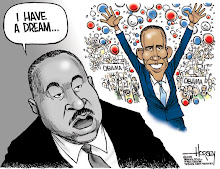










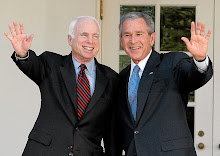



 Posts
Posts

